
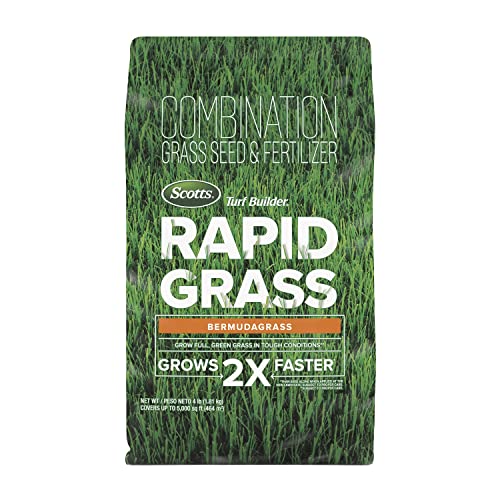
Scotts Turf Builder Rapid Grass Bermudagrass
Consider it for a sunny Bermuda project when a combined seed-and-fertilizer application fits the job. Treat the speed claim as a manufacturer comparison, and plan establishment around the growing season.
- A good fit for
- New bermudagrass areas or overseeding an existing Bermuda lawn in suitable warm, sunny conditions.
- The tradeoff
- The 5,000-square-foot figure is for overseeding. New-lawn coverage is much smaller, and faster growth does not make Bermuda a shade grass or establish a current cultivar identity.
We may earn a commission from purchases through our links. How this works
Buy on AmazonResearch-based review · Updated
Seed and fertilizer for a Bermuda project
The primary purchase is a four-pound Rapid Grass Bermudagrass bag, model 18355. Scotts lists a 23-0-0 fertilizer analysis and describes a combination of seed and fertilizer. It is a different formula from Root-Building Nutrition products that also advertise a soil improver, and from EZ Seed products that include a repair mulch.
The total bag weight includes the combined material. It is not four pounds of plain bermudagrass seed. The reviewed description and generic label identify bermudagrass but do not verify the cultivar percentages, purity or germination analysis of the particular lot that will arrive.
That makes the combined application the defensible feature to evaluate. If choosing a named cultivar is central to the project, read the offered seed tag before deciding. If you want a practical seed-and-feed product, compare the stated coverage and planting instructions. Neither the fertilizer analysis nor the Rapid name establishes a head-to-head turf-quality winner.[5][6][7][4]
The warm-season planting window still matters
Read the timing and site-fit guidance
The detailed Scotts description recommends spring or early summer, with air temperatures consistently 70–90°F. Another panel says spring or fall at 65–80°F soil or 70–90°F air. Those calendar statements differ. Use the current package and local warm-season guidance rather than treating an isolated warm fall day as proof of enough establishment time.
Texas A&M describes bermudagrass as heat tolerant, durable and quick to recover through rhizomes and stolons, but weak in shade. It also distinguishes seeded types from interspecific hybrids propagated by sod or sprigs. Seed is not automatically the correct way to restore a particular existing hybrid Bermuda lawn.
Choose this for a suitable sunny Bermuda area, not simply any bare spot in a Southern yard. The speed claim does not change the species being introduced or the care it needs. An existing lawn of a different grass deserves a matching repair decision before a purchase based on faster growth.[5][1][2]
Calculate new-lawn quantity from the matching label
- One 4 lb bag: new lawn
- 1,498 sq ft on matching artwork; one web instruction instead says 1,495 sq ft.[5][6][7]
- 2,000 sq ft project
- About 5.34 lb new lawn or 1.6 lb overseeding, using the four-pound label’s coverage.[6]
Read the calculation and small source discrepancy
The four-pound manufacturer label states 1,498 square feet for new lawn and 5,000 square feet for overseeding. The current web description repeats 1,498, while its step-by-step text gives 1,495. The difference is small, but the two values should not be silently presented as one perfectly consistent instruction.
Using the matching label’s 1,498-square-foot figure, a 2,000-square-foot new lawn needs approximately 5.34 pounds of product. The same area of overseeding needs 1.6 pounds, calculated from four pounds covering 5,000 square feet. One four-pound bag would be insufficient for the new-lawn project. Confirm the purchased bag’s coverage before application.
These are combined-product quantities, not pure-seed rates. The spreader settings also change between new lawn and overseeding. Compare the current price for the amount your project requires, rather than relying on the 5,000-square-foot front-label figure for a bare area.[5][6][7]
Prepare shallow seed placement and frequent watering
For a new lawn, Scotts directs you to loosen roughly the top two inches of soil and remove dead grass or debris. Spread the product, then lightly rake it just beneath the surface. Two inches is the preparation depth; it is not the depth at which to bury the seed.
For overseeding, begin with mowing to approximately two inches or the lowest setting and raking for seed-to-soil contact. Follow the correct settings for the actual spreader and task. A familiar number from another Scotts product is not a substitute for the current bag’s directions.
The instructions call for daily watering, or watering as needed, until seedlings reach two inches. The helpful tips specify twice-daily watering for at least three weeks and mowing when new grass reaches two to three inches. Plan to monitor the seedbed throughout this period. The presence of fertilizer does not keep the soil moist or remove the need for careful placement.[5][6]
Read the growth comparison with all its qualifications
The “2x faster” claim compares this product with seed alone when applied at the new-lawn rate, subject to proper care. It does not say that every seed germinates twice as fast, that overseeding receives an identical benefit, or that Rapid Grass beats every other Bermuda product.
Scotts’ FAQ promotes full green grass in 21–28 days, while the artwork illustrates changes at fourteen and twenty-eight days. These are manufacturer expectations, not a guaranteed date for full traffic or mature performance. Bermuda’s general recovery ability should also not be mistaken for a measurement of this particular retail lot.
The maker says to avoid weed-control products until the lawn has been mowed at least four times. The artwork identifies mefenoxam-treated seed, not for food, feed or oil, and includes runoff precautions. Later feeding should account for the fertilizer already applied and a soil-test-led local program; the manufacturer’s repeated lawn-food promotion is not proof of universal nutrient need.[5][6][1][2]
Choose an alternative for the feature you need
The one-pound Turf Builder Bermudagrass with Root-Building Nutrition is a useful comparison for a smaller project where seed, fertilizer and soil improver are the desired format. Its 330-square-foot new-lawn coverage and 1,000-square-foot overseeding coverage belong to that package, not to Rapid Grass.
For discrete bare spots where absorbent mulch would be useful, EZ Seed Bermudagrass has a different repair format and application sequence. The mulch needs a thorough first soaking, and the coverage is sized for patches. It is not interchangeable with a lawn-scale seed-and-fertilizer rate.
There is no current side-by-side product test here establishing a universal winner. Make the comparison around the actual task: the grass already present, the area needing work, the material included and the watering you can provide. That is more useful than selecting a product solely because one front label emphasizes speed and another emphasizes roots.[5][8][9][6]
When to choose something else
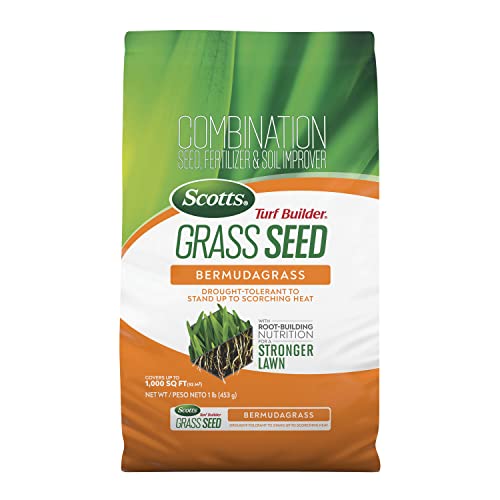
Scotts Turf Builder Grass Seed Bermudagrass with Fertilizer
Compare the smaller seed, fertilizer and soil-improver format with its own package coverage.
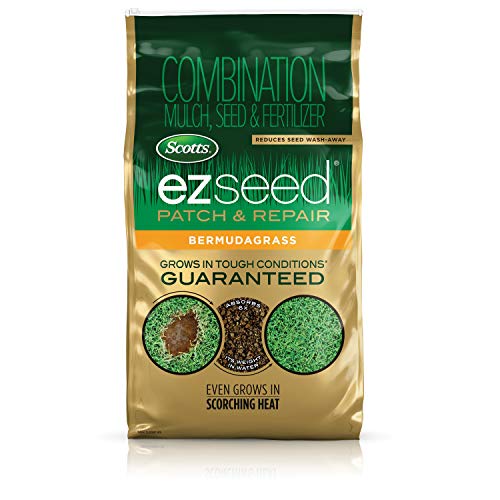
Scotts EZ Seed Patch & Repair Bermudagrass
For discrete Bermuda patches where an absorbent repair mulch is part of the desired application.
Sources & research notes
This review draws on published product information and grass-selection guidance. We have not conducted a hands-on trial of this product. Species guidance helps explain the choice; it is not a trial of the bag you buy.
- Texas A&M AggieTurf: Bermudagrass
Read 2026-09-23
- Clemson Extension: Bermudagrass Yearly Maintenance Program
Read 2026-09-23
- Outsidepride: Yukon Bermudagrass seed
Read 2026-09-23
- UMass Extension: understanding the turfgrass seed label
Read 2026-09-23
- Scotts: current package-specific description and directions
Read 2026-09-23
- Scotts: manufacturer package artwork
Read 2026-09-23
Amazon product identity: Scotts Turf Builder Rapid Grass Bermudagrass, 4 lbs.
Commerce identity only; not evidence of product performance.
Buy on AmazonRead 2026-09-23
- Scotts: current package-specific description and directions
Read 2026-09-23
- Scotts: current package-specific description and directions
Read 2026-09-23
Ready to compare the bag?
Check the package size and seed tag before ordering.