
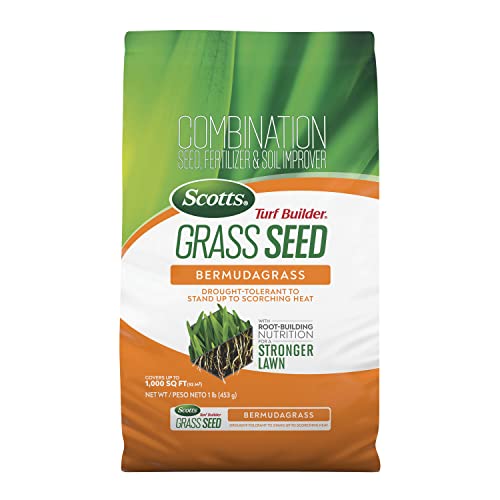
Scotts Turf Builder Grass Seed Bermudagrass with Fertilizer
A small-package option when bermudagrass fits the site and a combined seed-and-feed application suits the job. The lawn’s sunlight, existing grass and maintenance needs matter more than the front-label drought claim.
- A good fit for
- A small new bermudagrass area or a measured overseeding project in a suitable sunny Southern lawn.
- The tradeoff
- The one-pound bag covers only 330 square feet of new lawn. Bermudagrass is weak in shade, and the sources do not identify the cultivar analysis of your current bag.
We may earn a commission from purchases through our links. How this works
Buy on AmazonResearch-based review · Updated
One pound of a combination product
The linked package is the one-pound Turf Builder Bermudagrass with Root-Building Nutrition. Scotts describes three components: seed, fertilizer and soil improver, with a 4-0-0 fertilizer analysis. The bag’s total weight therefore is not a pound of plain grass seed.
The current description and package artwork identify bermudagrass without supplying the seed-analysis tag for the individual retail lot. That means this review does not assign a named cultivar, purity percentage or tested germination rate to the bag. The actual tag is the right place to check those details when matching a carefully selected lawn.
Treat the combined format as the buying feature. It brings seed and feeding material together for a small application, but it does not establish superior genetics or an independent drought-performance result. Comparing it with another product requires matching the task and amount needed, rather than comparing bag weight alone.[5][6][7][4]
Choose bermudagrass for sun and active-season use
- Sunny Bermuda project
- Matches the manufacturer’s intended setting and the species’ strong heat tolerance.[5][1]
- Shaded area
- Poor shade tolerance is a real species limit.[1]
- Existing hybrid Bermuda
- Seed is not automatically a genetic match for varieties maintained through sod or sprigs.[1]
Read the species-fit details
Scotts positions this product for full-sun Southern lawns. Texas A&M’s species guidance describes bermudagrass as a warm-season grass with strong heat and drought tolerance, useful wear tolerance and good recovery through rhizomes and stolons. It also identifies poor shade tolerance, frequent mowing and moderate to high fertility requirements as drawbacks.
Those spreading traits make bermudagrass useful in a suitable established lawn, but they also mean a seeded repair is a grass choice with lasting consequences. Do not assume that a bare spot in another species should receive Bermuda simply because the yard is in a warm region. The grass surrounding the patch matters.
Nor is this seed a way to reproduce every hybrid Bermuda lawn. Texas A&M distinguishes seeded types from interspecific hybrid varieties that must be established vegetatively with sod or sprigs. If matching an existing hybrid is important, establish its identity before introducing a bag of seed with an unspecified retail cultivar.[5][1][4]
The 1,000-square-foot headline is for overseeding
Read the coverage calculation
The matching bag lists 330 square feet of new-lawn coverage and 1,000 square feet of overseeding. Bare soil therefore needs roughly three times the combined product per square foot. The larger front-label number should not be used to plan a new lawn.
For 1,000 square feet of new lawn, the stated coverage implies approximately 3.03 pounds of product, calculated as 1,000 divided by 330. For 1,000 square feet of overseeding, it calls for one pound. These are package-based calculations for the combined Scotts material, not general bermudagrass seed rates.
For a small new area up to the stated 330 square feet, the package is easy to place in context. Larger projects may call for more than one bag or another verified size. Use the new-lawn or overseeding directions for the actual spreader, including the required passes, rather than assuming the same setting covers both jobs.[5][6][7]
Prepare in a consistently warm planting window
The package recommends late spring or early summer when daily average soil temperatures are consistently 65–80°F, or air temperatures are 70–90°F. The distinction between soil and air matters; an isolated warm afternoon does not establish a consistently warm seedbed.
For a new lawn, rake to loosen roughly the top two inches of soil and remove debris. Apply the product, then lightly rake so the seed is barely covered beneath the surface. The two-inch depth is preparation, not burial depth. For overseeding, the manufacturer begins with mowing low, collecting clippings and raking for seed-to-soil contact.
Scotts calls for daily watering, or watering as needed, to maintain surface moisture for at least three weeks or until seedlings reach two inches. Plan that access to water before applying. Drought tolerance is a useful mature-grass characteristic; the planting directions still depend on keeping a vulnerable new seedbed moist.[5][6][1]
Plan for a lawn that still needs care
The current Scotts FAQ gives seven to fourteen days as a germination estimate in suitable warm soil. That is an emergence window, not a guarantee of dense cover or readiness for unrestricted traffic. Follow the growth milestones on the purchased package rather than setting expectations only by the first green shoots.
For established home lawns, Texas A&M suggests a one- to two-inch mowing range with a rotary mower and weekly mowing during active growth. Clemson’s South Carolina guidance similarly ties maintenance to local conditions and soil tests. These are regional species recommendations, not a product-specific promise that every lawn will need exactly the same routine.
Scotts identifies mefenoxam-treated seed and says not to use it for food, feed or oil. Keep it away from food and children, follow the label’s waterway and heavy-rain precautions, and sweep stray material from paved surfaces. The small bag makes the application modest in size, not exempt from its directions.[5][6][1][2]
Compare a different format for a different repair
EZ Seed Bermudagrass is a relevant alternative for discrete bare spots when you want absorbent mulch included. Its application is different: prepare the spot, apply lightly with some ground visible, and thoroughly saturate the expanding mulch. It has its own repair coverage, so the one-pound Turf Builder rate should not be carried across.
Yukon is another bermudagrass seed product to examine if a named cultivar is a meaningful part of your choice. Compare its current seed tag and package instructions with the Scotts offer. A cultivar name makes a more specific comparison possible; it does not by itself prove that the product will outperform this bag in your lawn.
For this small Scotts package, the decision is whether the site suits Bermuda, the 330-square-foot new-lawn or 1,000-square-foot overseeding coverage fits the project, and you can support establishment. Resolve shade or species mismatch before choosing between products aimed at the same broad Southern-lawn market.[5][6][8][3][1][4]
When to choose something else
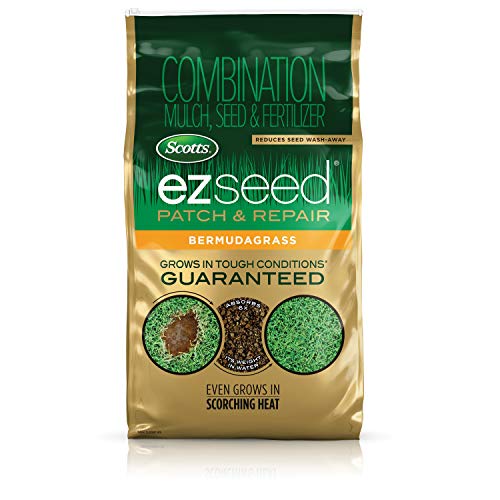
Scotts EZ Seed Patch & Repair Bermudagrass
For discrete Bermuda repairs where absorbent mulch is part of the desired format; follow its separate coverage and application steps.
Outsidepride Yukon Bermudagrass
Compare a named bermudagrass cultivar using the actual seed tag and its own planting directions.
Sources & research notes
This review draws on published product information and grass-selection guidance. We have not conducted a hands-on trial of this product. Species guidance helps explain the choice; it is not a trial of the bag you buy.
- Texas A&M AggieTurf: Bermudagrass
Read 2026-09-23
- Clemson Extension: Bermudagrass Yearly Maintenance Program
Read 2026-09-23
- Outsidepride: Yukon Bermudagrass seed
Read 2026-09-23
- UMass Extension: understanding the turfgrass seed label
Read 2026-09-23
- Scotts: current package-specific description and directions
Read 2026-09-23
- Scotts: manufacturer package artwork
Read 2026-09-23
Amazon product identity: Scotts Turf Builder Grass Seed Bermudagrass, 1 lb.
Commerce identity only; not evidence of product performance.
Buy on AmazonRead 2026-09-23
- Scotts: current package-specific description and directions
Read 2026-09-23
Ready to compare the bag?
Check the package size and seed tag before ordering.