
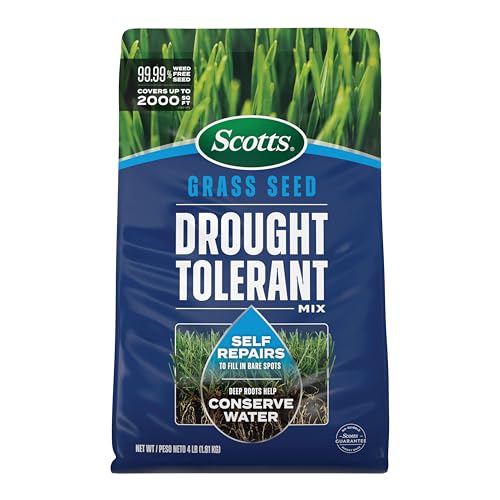
Scotts Grass Seed Drought Tolerant Mix
Consider it for a suitable cool-season lawn when you want tall fescue with a bluegrass component. Buy on grass fit and package coverage, not an assumed reduction in water use.
- A good fit for
- A sunny, well-drained cool-season lawn where tall fescue and bluegrass suit the site and establishment watering is available.
- The tradeoff
- Drought tolerance concerns established grass. It does not remove seedbed watering or establish a water-saving percentage for this retail mix.
We may earn a commission from purchases through our links. How this works
Buy on AmazonResearch-based review · Updated
The two grass types have different jobs
Scotts identifies tall fescue and Kentucky bluegrass in Drought Tolerant Mix. The manufacturer connects tall fescue with deeper roots and bluegrass with spreading growth. Penn State's independent species guidance supports those broad mechanisms: tall fescue can develop a deep root system, while bluegrass forms underground rhizomes.
That is a sound way to understand the product's intent, but it is not a current-lot performance test. The selected product page does not identify cultivar names or blend percentages. We cannot use the species list to assign a precise share of the finished lawn to either component, or to rank this bag against a named research cultivar.
The existing purchase link is for four pounds. Check the actual seed tag when the proportions or specific varieties matter, and use this package's own coverage directions. Similar blue Scotts bags and older Turf Builder formulations should not be treated as interchangeable simply because they emphasize drought tolerance.[5][7][4][2]
Separate deeper roots, spreading repair and water savings
- Tall fescue
- Deep rooting helps explain drought tolerance, after the root system develops.[4]
- Kentucky bluegrass
- Rhizomes support spreading growth; prolonged heat and drought can still cause dormancy.[4]
Read what drought tolerance means here
Tall fescue's rooting habit can help it tolerate dry conditions, but Penn State also notes that it takes time to establish an extensive root system. Bluegrass's rhizomes give it recovery potential, yet the species may become semi-dormant during prolonged heat and drought. Neither mechanism is a promise of permanent green color without irrigation.
Scotts says the established mix can need less frequent watering, but the reviewed product sources do not provide a measured percentage reduction for the current retail bag. We therefore do not turn the product name into a claim that it cuts a water bill by a particular amount or meets a particular watering restriction.
Start with the setting. Penn State favors sunny, well-drained conditions for bluegrass and describes tall fescue as tolerant of moderate shade. A lawn with persistent drainage, shade or wear problems needs those conditions considered first. Choosing a drought-labeled mixture is not a substitute for understanding why the current lawn struggles.[5][4][1]
Size the four-pound bag for the project
Read the quantity calculation
The maker's page and matching package artwork agree on 665 square feet for new lawn and 2,000 square feet for overseeding. Those are the figures for the linked four-pound bag. The larger area is for thickening existing grass, not establishing bare ground.
A 1,000-square-foot new lawn needs approximately 6.02 pounds, calculated from four pounds per 665 square feet. The same area of overseeding needs two pounds at four pounds per 2,000 square feet. One bag therefore is too small for the new-lawn example but contains twice the calculated overseeding amount.
The new-lawn calculation is approximate because the published coverage is rounded. Use the current bag directions and appropriate spreader setting for the actual application. When comparing with another product, compare how much is required for your measured area, not simply whether two bags have similar weight or similarly large coverage claims.[5][6][7]
Follow the package’s planting window and seed placement
The matching package artwork recommends spring or fall when average soil temperature is 60–75°F, or air temperature is 65–85°F. The current webpage gives a broader 60–80°F planting description without the same distinction. Use the actual bag's directions and appropriate local timing rather than treating the two temperature measurements as interchangeable.
For a new lawn, loosen roughly the top two inches of soil and clear debris. After spreading, lightly rake the seed so it sits just beneath the surface. Two inches describes seedbed preparation; it is not the intended depth of the seed.
The artwork directs daily watering as needed to keep the surface moist, continuing frequent watering for at least three weeks or until seedlings reach two inches. This is the part of a drought-tolerant project that can seem counterintuitive: the long-term grass choice still begins with a seedbed that needs consistent attention and moisture.[5][6]
Do not confuse early green shoots with drought readiness
Scotts' FAQ estimates six to ten days to the first sprouts under proper conditions. It does not verify that the entire mixed stand is established or ready to cope with dry weather at that point. Penn State's description of slower bluegrass establishment and tall fescue root development is a useful reason to be patient.
Once the lawn is growing, care should fit the species, local climate and observed condition. Penn State notes that tall fescue can suffer brown patch during hot, humid weather, especially with excessive nitrogen. Bluegrass has its own maintenance demands and can form thatch. A drought-focused product name does not remove those considerations.
The package's weed-free claim also should not be read as a promise of a weed-free yard. A seed analysis concerns the contents of the bag; the renovation conditions still matter. Inspect the current tag and use the manufacturer directions alongside local lawn guidance, instead of assuming one package claim answers every establishment question.[5][4][2][1]
Compare tall fescue alone when that is the actual preference
Scotts Tall Fescue Mix is a relevant comparison if you want a product identified as tall fescue rather than a tall-fescue and bluegrass mixture. Its current Root-Building Nutrition version also includes fertilizer and soil improver. That is a different product format with different coverage and application quantities.
The choice is not an independently established drought-performance ranking. We have not tested the current bags side by side, and the reviewed sources do not show that one will save a specified amount of water in your yard. Instead, compare the intended grass composition, actual seed analysis and requirements for the measured project.
Drought Tolerant Mix is most coherent when both grass types fit the site, you accept the limits of the available cultivar information, and you can care for the new planting. If the obstacle is an inability to keep seed moist during establishment, the product name does not resolve it; timing and the establishment plan need attention first.[8][5][4][2][6]
When to choose something else
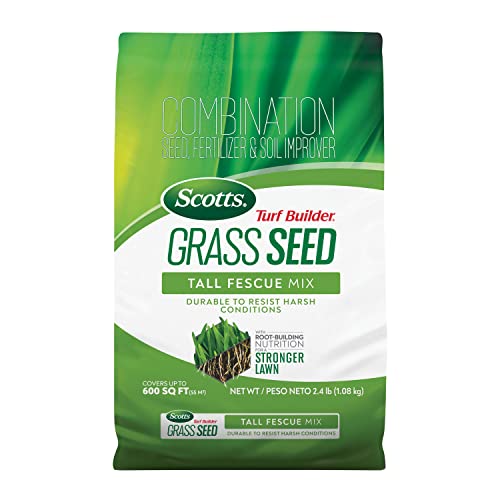
Scotts Turf Builder Grass Seed Tall Fescue Mix
Compare the current tall-fescue combination product if you prefer tall fescue without a listed bluegrass component; use its different coverage and formulation in the comparison.
Sources & research notes
This review draws on published product information and grass-selection guidance. We have not conducted a hands-on trial of this product. Species guidance helps explain the choice; it is not a trial of the bag you buy.
- University of Minnesota Extension: renovating a lawn
Read 2026-09-23
- UMass Extension: understanding the turfgrass seed label
Read 2026-09-23
- Pennington: The Rebels Tall Fescue Grass Seed Blend
Read 2026-09-23
- Penn State Extension: turfgrass species for Pennsylvania, bluegrass and fescues
Read 2026-09-23
- Scotts: current product description and package-specific directions
Read 2026-09-23
- Scotts manufacturer package artwork and use directions
Read 2026-09-23
Amazon product identity: Scotts Grass Seed Drought Tolerant Mix, 4 lbs.
Commerce identity only; not evidence of product performance.
Buy on AmazonRead 2026-09-23
- Scotts: current product description and package-specific directions
Read 2026-09-23
Ready to compare the bag?
Check the package size and seed tag before ordering.