
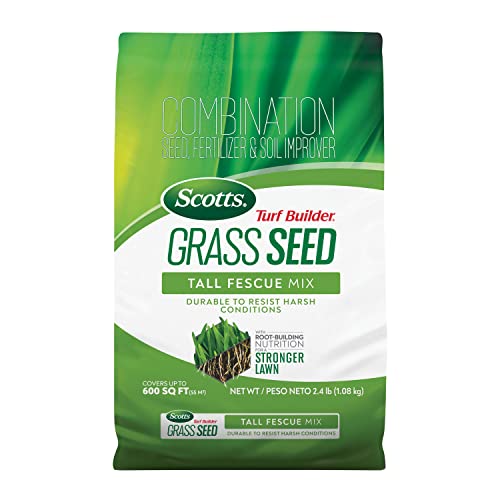
Scotts Turf Builder Grass Seed Tall Fescue Mix
A practical small-project option when tall fescue fits the site and a combined seed-and-feed product suits the job. Check the bag analysis if named cultivars drive your decision.
- A good fit for
- A small new-lawn or overseeding project in a sunny to moderately shaded area suited to cool-season tall fescue.
- The tradeoff
- The small bag’s 600-square-foot headline is for overseeding; bare soil coverage is only 200 square feet. Deep shade and rapid repair are weaker fits for tall fescue.
We may earn a commission from purchases through our links. How this works
Buy on AmazonResearch-based review · Updated
Buy the current combination, not an older bag by the same name
The existing purchase link is for the 2.4-pound Tall Fescue Mix with Root-Building Nutrition. Scotts describes a combination of seed, fertilizer and soil improver, and lists a 4-0-0 fertilizer analysis. The package weight therefore describes the combined product; it should not be treated as an equal weight of plain, uncoated seed.
The current product page identifies tall fescue but does not provide the cultivar analysis for the particular lot you will receive. That limits comparisons based on named varieties. A generic package image, or a familiar Turf Builder name, is not enough to establish cultivar percentages, purity or germination for an individual bag.
If you are matching a carefully chosen existing stand, inspect the offered seed tag before buying. If your priority is a small practical repair, the combination format and correct application quantity may be more useful decision points. Neither approach requires calling this the best tall fescue or assuming a more expensive alternative performs better.[5][6][7][2]
Give tall fescue a suitable job
- Sun or moderate shade
- This matches the manufacturer’s intended setting and Penn State’s general tall-fescue guidance.[5][4]
- Heavy shade
- Tall fescue is less shade tolerant than fine fescues; changing the site or grass choice may matter more.[4]
- Repeated worn patches
- Tall fescue’s fair recovery is a limit; do not equate durability with rapid spreading repair.[4]
Read the site-fit guidance
Scotts positions this mix for sun and moderate shade. Penn State's species guidance supports that general fit: tall fescue prefers well-drained soil and tolerates moderate shade, while fine fescues are better adapted to heavier shade. That is guidance about grass types, not a trial of this Scotts bag.
Tall fescue's deeper rooting helps explain its drought tolerance. It does not make a new planting independent of irrigation. Penn State also describes tall fescue as primarily bunch-forming, with only fair recovery from damage. A durable established plant and a lawn that rapidly fills every worn patch are different expectations.
For a small renovation, first identify why grass became thin. Recurring shade, traffic or unsuitable conditions can matter more than changing the logo on the bag. The mix is a reasonable product to consider when the site already suits tall fescue; it is less persuasive as a solution to a persistent problem that remains unchanged.[5][4][1]
Use 200 square feet for a new lawn
Read the coverage calculation
The 2.4-pound bag has two distinct coverage figures: 200 square feet for new lawn and 600 square feet for overseeding. The larger number is appropriate only to thickening existing grass. Using it for bare ground would substantially underapply the product.
Dividing bag weight by those areas gives 12 pounds per 1,000 square feet for a new lawn and four pounds per 1,000 square feet for overseeding. These are calculated rates for this combination product, not general tall-fescue seed rates. A 1,000-square-foot new lawn needs 12 pounds; the same area of overseeding needs four pounds.
This makes the small package easy to place in context. One bag is sufficient for a modest patch at the stated new-lawn coverage. A larger project requires more product or another verified package size. Compare the current total project cost using matching coverage, rather than comparing shelf prices or assuming every pound is equivalent seed.[5][6][7]
Prepare the soil, then place seed near the surface
The package recommends spring or fall seeding when average soil temperature is 60–75°F, or air temperature is 65–85°F. Those are different measurements; a single warm afternoon is not a substitute for a consistently suitable planting window.
For a new lawn, the instructions call for loosening roughly the top two inches of soil and removing dead grass and debris. After spreading, lightly rake the seed so it sits just beneath the surface. Two inches is the preparation depth, not the burial depth for the seed.
Scotts asks for daily watering, or watering as needed, to keep the surface moist. The artwork describes continuing frequent watering for at least three weeks or until seedlings reach two inches. Plan access to water before opening the bag. The fertilizer component does not replace seed-to-soil contact, an even application or moisture during the vulnerable establishment phase.[6][5]
Separate first sprouts from an established lawn
Scotts' current FAQ gives roughly six to ten days to the first sprouts under suitable conditions. That estimate describes visible emergence, not a finished stand ready for its normal use. Penn State notes that tall fescue takes time to develop an extensive root system, which is especially relevant when drought tolerance is the reason for buying it.
Later care should fit the grass and your region. Penn State's Pennsylvania guidance suggests a two- to three-inch mowing range and moderate fertility, while also warning that excessive nitrogen during hot, humid weather worsens brown patch. That regional guidance is not a universal feeding schedule for every yard.
The package is treated seed, with mefenoxam listed in the artwork. Follow its handling and storage directions: it is not food, feed or an oil product. Keep stray material off hard surfaces and out of drainage areas. Read the current bag before adding other lawn treatments, rather than assuming a combined product needs the same additions as plain seed.[5][6][4]
Compare another tall-fescue blend for the reason you would switch
The Rebels is a useful alternative to examine if you want another tall-fescue product, particularly when choosing a larger bag for a larger project. Pennington publishes its own coverage and establishment directions. Transfer neither the Scotts spreader settings nor its combination-product rate to that different package.
The comparison does not establish that one brand produces a darker or more durable lawn in your yard. The sources reviewed here do not provide a current-bag, side-by-side performance test. If cultivar identity is important, compare actual seed tags rather than relying on broad brand positioning.
For the Scotts bag, the buying case is straightforward: the site suits tall fescue, the area is measured, the 200- or 600-square-foot coverage matches the job, and you can maintain moisture through establishment. If one of those conditions is missing, resolve it before choosing between bags with similar promises on the front.[3][5][6][2][4]
When to choose something else
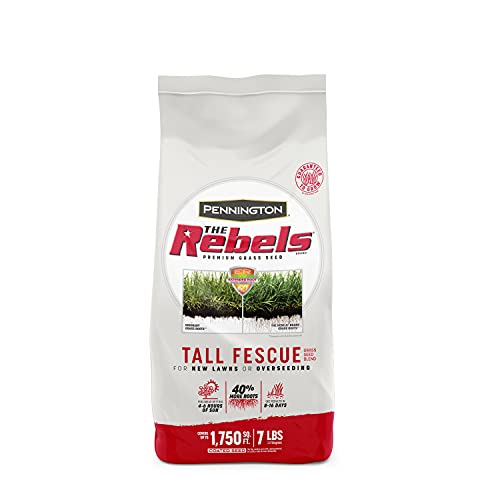
Pennington The Rebels Tall Fescue Mix
Compare another tall-fescue blend and its own package coverage for a larger project; no head-to-head performance winner is established.
Sources & research notes
This review draws on published product information and grass-selection guidance. We have not conducted a hands-on trial of this product. Species guidance helps explain the choice; it is not a trial of the bag you buy.
- University of Minnesota Extension: renovating a lawn
Read 2026-09-23
- UMass Extension: understanding the turfgrass seed label
Read 2026-09-23
- Pennington: The Rebels Tall Fescue Grass Seed Blend
Read 2026-09-23
- Penn State Extension: turfgrass species for Pennsylvania, bluegrass and fescues
Read 2026-09-23
- Scotts: current product description and package-specific directions
Read 2026-09-23
- Scotts manufacturer package artwork and use directions
Read 2026-09-23
Amazon product identity: Scotts Turf Builder Grass Seed Tall Fescue Mix, 2.4 lbs.
Commerce identity only; not evidence of product performance.
Buy on AmazonRead 2026-09-23
Ready to compare the bag?
Check the package size and seed tag before ordering.