
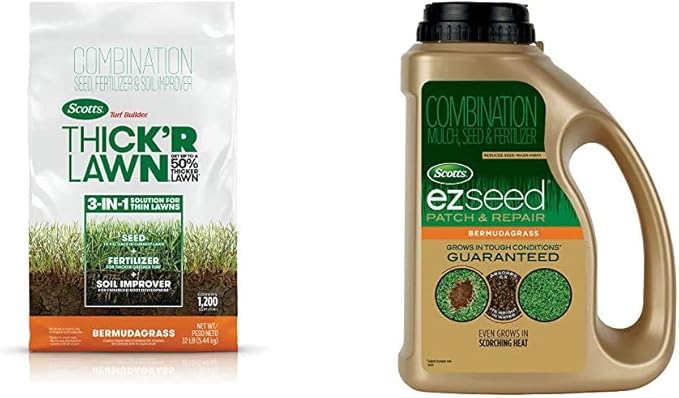
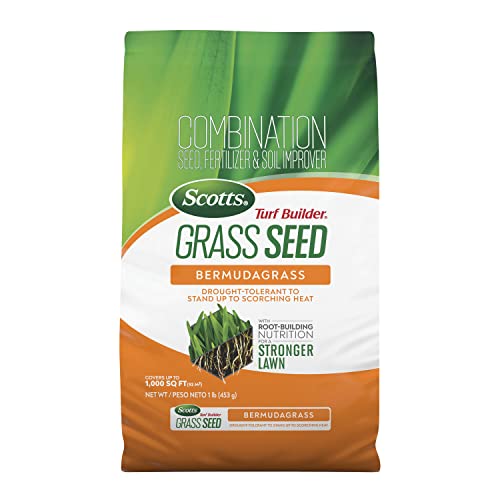
Scotts Turf Builder Bermudagrass
Buy on AmazonLast updated:
Quick Stats
- Warm Season
- Full Sun (6+ hours)
- 7, 8, 9, 10
- 3.0 lbs per 1,000 sq ft (8 lb bag covers 2,665 sq ft)
- 1-2 inches
Verify these figures against the current package before buying or applying.
What's in the Bag
- Bermudagrass (common)on seed tag
Species listed from catalog and manufacturer sources. Exact percentages print on each lot’s seed tag rather than the listing.
Combination product — the bag includes Bermudagrass seed, fertilizer, and soil improver. Exact cultivar, pure seed percentage, germination, weed seed, inert matter, origin, lot number, and test date require a current seed-analysis tag.
The catalog does not verify the current composition — check the seed tag on your bag for the exact species and cultivar percentages, purity, weed seed, germination test date, lot, and net weight before relying on this panel.
Pros & Cons
Pros
- Current Scotts source supports 8 lb model 18053 product identity
- Manufacturer-backed 2,665 sq ft new-lawn / 8,000 sq ft overseeding coverage
- Bermudagrass species guidance supports heat, drought, traffic, and spreading context
- Combination format includes seed, fertilizer, and soil improver
- Good mainstream option when the site is full-sun warm-season turf
Cons
- Goes brown/dormant in winter below 60F
- Requires full sun — fails in shade
- Aggressive spreading can invade flower beds and neighbor's yards
Catalog pros and cons are not presented as verified product facts. Check the current package and dated source notes before relying on a specific claim.
Fit to verify
Southern homeowners in zones 7-10 with full-sun yards who want a tough, heat-loving, low-cost lawn. — confirm against your own zone, sun, and soil conditions.
Yard-fit evidence
Supported evidence notes
These notes show only claims currently supported for human use. They do not establish current price, stock, package identity, or fit for your lawn.
Seed mix fingerprint
One blend, one job.
Species shown from attached product data. Exact percentages belong on the current seed tag.
Bermudagrass (common)
Heat runner
A warm-season spreader for hot sunny lawns, but the wrong fit for a winter-green cool-season expectation.
What the current evidence supports
Each statement below comes from a receipt currently approved for positive human use. Scope and caveats still apply.
- Amazon ASIN B0B9PS6J6T is attached only as a commerce/listing-state reference for this product; it is not evidence for seed composition, cultivar performance, or regional fit.
- Scotts currently identifies model 18053 as the 8 lb Turf Builder Grass Seed Bermudagrass product, and the Scotts canonical URL redirects to the active ScottsMiracle-Gro product page.
- Scotts states the 8 lb bag covers 2,665 sq ft for a new lawn and 8,000 sq ft for overseeding, is designed for full sun with high drought resistance and high durability, and should be planted around warm soil/air temperature thresholds with daily watering until seedlings reach 2 inches.
The current package and site still decide
Retailer links are commerce exits, not agronomic evidence. Verify package identity, label details, and local fit independently.
- Cultivar names and whether they match any trial data you care about.
- Purity, weed seed, germination test date, and lot information.
- Current price, seller, bag size, and availability before checkout.
Checked against the manufacturer's listing and the seed label.
Scotts Turf Builder Bermudagrass has 3 supported human receipts. Use only those bounded claims and verify the current package before acting.
View source notesDecision Notes
What this page can establish
The catalog identifies Scotts Turf Builder Bermudagrass and links to source notes where available. It does not establish a current seed tag, lot, seller, price, availability, NTEP result, or product performance in your yard.
Verify before choosing
- - Match the current package contents and application rate to the exact SKU.
- - Check cultivar names against relevant trials only when the identity matches.
- - Confirm local species fit with extension guidance and your site conditions.
- - Confirm seller, bag size, price, and availability at checkout.
Other options to compare
These are comparison links, not ranked substitutes or fit recommendations.
Our Notes
If the lawn is full-sun warm-season territory, Scotts Turf Builder Bermudagrass is the mainstream seed + fertilizer + soil-improver option I would compare first. Current Scotts sources support the 8 lb model 18053 identity, 4-0-0 fertilizer analysis, mefenoxam treatment warning, Root-Building Nutrition positioning, and coverage split of 2,665 sq ft new lawn or 8,000 sq ft overseeding.
The source pass removed old overclaims. Current official Scotts sources do not support WaterSmart coating language for this product, and the old catalog treated 8,000 sq ft as new-lawn coverage when Scotts uses it for overseeding. Retailer-hosted Q&A snippets point toward Unhulled Gold Glove and not-coated language, but those are review leads until a current seed-analysis tag proves the retail lot.
Bermudagrass species guidance remains strong: it is a heat-loving, full-sun, spreading warm-season turf that can recover from wear when managed well. It also goes dormant in cool weather, struggles in shade, and can invade beds and edges, so local extension guidance still matters.
Editorial catalog notes — not lab-tested results; verify current label facts.
Where to Buy
Commerce links only. Verify the exact item, seller, package, price, and availability on the retailer page.
Community evidence limit
No synthesized testimonial is presented for this product. Community reports may identify questions or recurring patterns, but they do not establish product quality, value, current package identity, performance, or fit without an attributable source and matching evidence.
Seeding Calculator
Catalog rate: 3.0 lbs per 1,000 sq ft (8 lb bag covers 2,665 sq ft). Verify the current label before using this estimate.
Pairs Well With
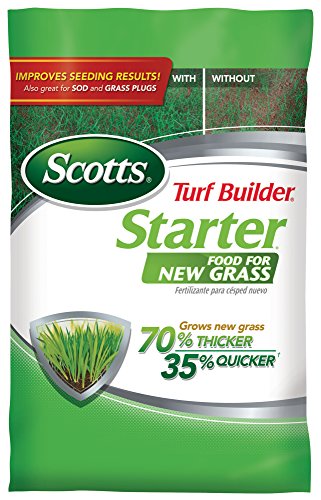 Fertilizer
Product fit is unverified here. Open the evidence notes and confirm the current package for your site and intended use.
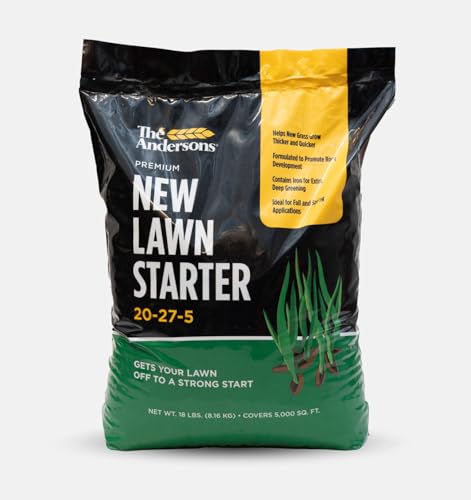 Fertilizer
The Andersons
The Andersons Starter Fertilizer 18-24-12
Product fit is unverified here. Open the evidence notes and confirm the current package for your site and intended use.
Similar Products
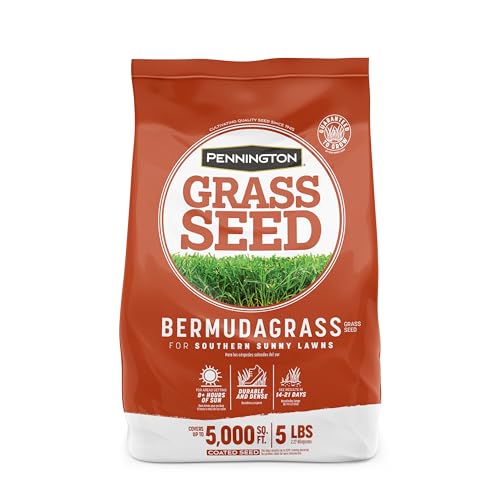 Grass Seed
Pennington
Pennington Smart Seed Bermudagrass
Product fit is unverified here. Open the evidence notes and confirm the current package for your site and intended use.
 Grass Seed
Product fit is unverified here. Open the evidence notes and confirm the current package for your site and intended use.
 Grass Seed
Outsidepride
Outsidepride Yukon Bermudagrass
Product fit is unverified here. Open the evidence notes and confirm the current package for your site and intended use.