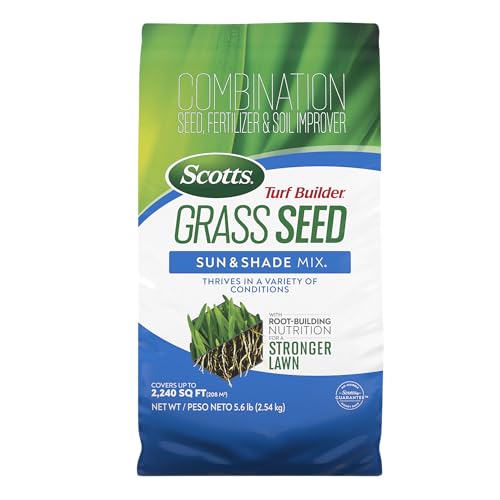
Scotts Turf Builder Grass Seed Sun and Shade Mix
Consider it when one cool-season lawn has both sunny and shaded areas, after checking whether its darkest or busiest spots need a different approach.
- A good fit for
- A cool-season lawn with varied light where a blend of bluegrass, perennial ryegrass and fine fescues fits better than choosing only one species.
- The tradeoff
- The species bring different strengths and limits. Shade-tolerant fine fescues are not ideal for heavy traffic or hot, humid sites, and the exact retail-lot proportions are unverified.
We may earn a commission from purchases through our links. How this works
Buy on AmazonResearch-based review · Updated
A mixed lawn starts with different grass types
Scotts lists Kentucky bluegrass, perennial ryegrass, creeping red fescue, Chewings fescue and hard fescue in the current Sun & Shade Mix. These are not interchangeable names for the same grass. Penn State describes bluegrass's rhizomatous growth, perennial ryegrass's quick establishment, and fine fescues' tolerance of shade and lower fertility.
That mixture is the main reason to consider the product for a lawn with changing light conditions. It does not prove that every listed species will perform equally in every part of the yard. Nor does the species list establish the proportions or named cultivars in the bag you receive.
The linked package is 5.6 pounds and includes Root-Building Nutrition: seed, fertilizer and soil improver, with a listed 4-0-0 analysis. Check the actual seed tag if blend percentages or cultivar identity are important to your project. Avoid carrying an older formulation's percentages into a current purchase.[5][7][2][4]
- Variable light
- The current species list combines bluegrass, perennial ryegrass and several fine fescues.[5]
- Shaded, lightly used areas
- Fine fescues offer shade tolerance, but their presence does not verify a particular lot percentage.[4][2][5]
- Shaded and heavily used areas
- Fine fescues’ traffic limits matter; the word “shade” does not resolve repeated wear.[4]
Read the mixed-species tradeoff
Scotts advertises growth from full sun to dense shade. That is the manufacturer's product positioning, not a promise that turf will work beneath every tree or structure. Penn State's guidance helps explain why the mixture can handle different conditions while still having limits.
Fine fescues tolerate shade, but they are poorly adapted to high traffic, hot and humid conditions, and poorly drained soil. Bluegrass prefers open sun and does poorly in heavy shade. Perennial ryegrass is only moderately shade tolerant. A mixed bag therefore contains grasses with different responses, rather than a single plant that excels everywhere.
Before reseeding a persistently bare spot, consider the cause and the demands on it. A shaded resting area and a narrow, shaded walkway receive very different pressure. Minnesota's renovation guidance emphasizes selecting grass and management for the site. If the same spot repeatedly fails, the right next step may involve changing those conditions instead of repeatedly adding seed.[5][4][1]
Use the 5.6-pound directions for the linked bag
Read the coverage calculation
The selected manufacturer page and matching artwork give 745 square feet for new lawn and 2,240 square feet for overseeding. The smaller 2.4-pound version has different totals, so verify the selected size when reading a retailer or manufacturer page.
For 1,000 square feet, the 5.6-pound bag's coverage calculates to about 7.52 pounds for new lawn and 2.50 pounds for overseeding. One bag therefore will not establish 1,000 square feet of bare ground at the specified coverage, although it contains more than enough for that area of overseeding.
The calculation uses the manufacturer's rounded area figures for the complete combination product. It is not a rate for raw seed alone. Measure the actual lawn area, exclude paths and beds, and match new-lawn or overseeding directions to the project. The front-of-bag coverage is useful only after you know which job it describes.[5][6][7]
Prepare for different emergence speeds
Scotts' FAQ estimates six to twelve days to the first green sprouts with proper watering. That does not mean every species in the mixture appears together, or that the lawn is established at day twelve. Penn State describes perennial ryegrass as fast to establish and bluegrass as slower; hard fescue also develops relatively slowly.
The matching package recommends spring or fall planting at average soil temperatures of 55–70°F, or air temperatures of 60–80°F. Prepare a new site by loosening roughly two inches of soil, then lightly rake the applied seed just beneath the surface. The preparation depth should not be confused with seed burial.
Keep the surface moist through establishment. Scotts describes daily watering as needed and frequent watering for at least three weeks or until seedlings reach two inches. Judge progress over the establishment period, not simply by the first fast-growing shoots. Consistent seedbed care remains necessary even though the bag already contains fertilizer.[5][6][4]
Manage the blend for the conditions it actually faces
The different species also have different maintenance responses. Penn State notes that fine fescues are less suited to high nitrogen inputs, while bluegrass generally requires more nitrogen and can form thatch. That is a reason to use local guidance and the actual lawn's condition, rather than assuming one aggressive feeding program improves every component.
Heat and drought may temporarily reduce the appearance of cool-season grasses. The manufacturer presents this as a resilient mix, but the sources do not establish a precise water-saving percentage or a current-bag performance ranking. A lawn's response still depends on its species balance, site and management.
The manufacturer artwork identifies mefenoxam-treated seed and gives handling precautions, including keeping it away from food and feed. Store remaining product as directed and keep applications away from water and drainage areas. These are practical instructions for this product, not evidence that it replaces other preparation or solves all disease risks.[4][5][6]
Compare a fine-fescue option for a different priority
Outsidepride Legacy is worth comparing when the main aim is a fine-fescue lawn with lower-input expectations and suitable traffic levels. Its documented blend differs from Scotts' bluegrass, ryegrass and fine-fescue combination. The product directions and quantity calculation also differ.
That comparison should follow the reason you would reject Sun & Shade. If you mainly want a fine-fescue composition, another blend may be more direct. If the yard includes sunny, more actively used spaces alongside shade, examine the full mix and local species guidance rather than making the decision from a shade label alone.
We have not established a head-to-head winner from current retail bags. The useful distinction is the intended grass composition and the maintenance setting. Verify the seed tag, measure the area and plan the establishment work before treating either product as the answer to a recurring bare patch.[8][5][4][2]
When to choose something else
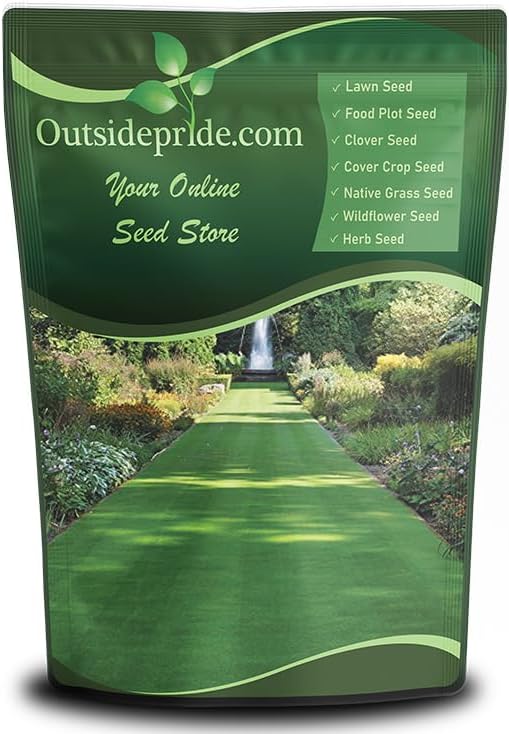
Outsidepride Legacy Fine Fescue Mix
Compare a documented fine-fescue blend when that composition and lower-input use are the main priorities, while respecting fine fescue’s traffic and climate limits.
Sources & research notes
This review draws on published product information and grass-selection guidance. We have not conducted a hands-on trial of this product. Species guidance helps explain the choice; it is not a trial of the bag you buy.
- University of Minnesota Extension: renovating a lawn
Read 2026-09-23
- UMass Extension: understanding the turfgrass seed label
Read 2026-09-23
- Pennington: The Rebels Tall Fescue Grass Seed Blend
Read 2026-09-23
- Penn State Extension: turfgrass species for Pennsylvania, bluegrass and fescues
Read 2026-09-23
- Scotts: current product description and package-specific directions
Read 2026-09-23
- Scotts manufacturer package artwork and use directions
Read 2026-09-23
Amazon product identity: Scotts Turf Builder Grass Seed Sun & Shade Mix, 5.6 lbs.
Commerce identity only; not evidence of product performance.
Buy on AmazonRead 2026-09-23
- Outsidepride: Legacy Fine Fescue product and planting guide
Read 2026-09-23
Ready to compare the bag?
Check the package size and seed tag before ordering.