
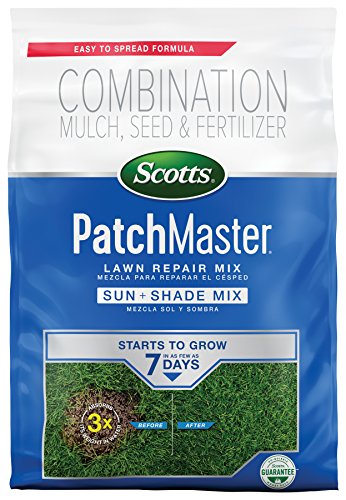
Scotts PatchMaster Lawn Repair Mix Sun + Shade
Consider it for a modest cool-season repair when you want seed and mulch together. Choose by the exact package coverage and follow its saturation and moisture instructions.
- A good fit for
- Repairing bare or thin areas with a premixed seed, mulch and fertilizer product.
- The tradeoff
- The 4.75-pound bag covers only 70 square feet of bare ground. Current Scotts web coverage for the larger 10-pound bag should not be transferred to this purchase.
We may earn a commission from purchases through our links. How this works
Buy on AmazonResearch-based review · Updated
Check the bag size before comparing coverage
The existing purchase link is for PatchMaster Sun + Shade in a 4.75-pound bag, manufacturer model 14905. Matching Scotts package artwork dated 2018 gives 70 square feet for bare areas and 140 square feet for thin areas. That artwork establishes the coverage for the package format; it is not a seed-analysis tag for the lot being sold today.
The current Scotts product page selects a different 10-pound bag and lists 145 square feet bare or 290 square feet thin. Those figures are useful for identifying the larger size, but they do not belong on the smaller bag’s buying calculation. Confirm the label on the actual offer before purchase.
This distinction is particularly consequential for patch mixes because the total weight includes mulch and fertilizer. A familiar product name and a large front-label coverage figure are not enough to establish how much bare ground the bag will repair. The smaller package should be considered on its own area and directions.[5][6][7][2]
Use a cool-season repair mix for a suitable lawn
- Bare or thin cool-season area
- The intended repair task, using the package’s different coverage figures.[5][6][4]
Read the site-fit explanation
Scotts lists Kentucky bluegrass, perennial ryegrass, creeping red fescue and Chewings fescue in the current Sun + Shade family. It also lists a 2-0-0 fertilizer analysis and describes 100 percent recycled pelletized mulch. The product is a premixed repair material, not a bag of tall-fescue-only seed or a warm-season grass.
Penn State’s species guidance explains the mixture’s broad logic: ryegrass establishes quickly, bluegrass can spread by rhizomes, and fine fescues contribute shade tolerance. Those traits do not establish exact cultivar composition or performance for this bag. They also do not make the mixture an exact match for every lawn surrounding the patch.
Diagnose recurring damage before reseeding. University of Minnesota’s renovation guidance emphasizes evaluating the cause and choosing suitable grass. If the site remains too shaded, compacted or otherwise unsuitable, adding a mulch-and-seed product alone is not a complete repair strategy. For a compatible lawn and a discrete damaged area, the combined format can simplify the materials needed.[5][6][4][1][2]
Read the package-specific calculation
The matching 4.75-pound artwork makes the area distinction explicit: 70 square feet of bare spots, or 140 square feet of thin grass. The front’s larger number should not be used to calculate a bare-soil repair. At the same package size, bare ground requires twice as much material per square foot.
For 100 square feet of bare areas, the coverage implies approximately 6.79 pounds of product, calculated as 4.75 multiplied by 100 divided by 70. One 4.75-pound bag would be short. For 100 square feet of thin areas, the corresponding estimate is approximately 3.39 pounds using the 140-square-foot figure.
These calculations are for this premixed patch product and the matching artwork. They are not general seeding rates for bluegrass, ryegrass or fine fescue. Check current package directions before application and compare total project cost using the right repair condition, rather than assuming a larger headline means better value.[6][7][2]
Shake, spread thinly, then saturate the mulch
Prepare and mix
Remove dead material, loosen the soil and shake the bag before spreading.[6]
Cover thinly
Apply an even thin layer that completely covers the repair area.[5][6]
Saturate and maintain
Water gently until saturated without pooling; continue checking moisture.[5][6]
Read the application details
The matching package directs you to shake the bag before application. Preparation includes removing dead grass and loosening roughly the top two inches of soil. That depth describes preparation, not a direction to bury the patch material two inches below the surface.
Spread an even, thin layer so the area is completely covered. Then water gently and thoroughly until the mulch is saturated and no more water is being absorbed, avoiding pooling or runoff. Continue watering daily or as needed to maintain moisture. The current family page describes keeping the soil moist until seedlings reach at least two inches.
Scotts says the recycled mulch absorbs three times its weight in water and that the product feeds for up to six weeks. These are manufacturer descriptions of the format, not independent comparisons with other repair products. The mulch’s ability to hold moisture supports the application process; it does not make the repair self-watering.[5][6]
Treat seven days as the early end of the range
The manufacturer advertises growth in as few as seven days, while its current detailed page gives a seven- to thirty-day germination range. Those are compatible only if the shorter statement is understood as early emergence, not a promise that the whole mixture finishes germinating in a week. The grasses in the blend do not all establish at the same pace.
Apply in spring or fall when daytime temperatures are 60–80°F and danger of frost has passed, following the current label. Keep children, pets, traffic and lawn mowers off the new seedlings until they reach three inches. That protection milestone is later than the two-inch height used in the watering directions.
Scotts says to wait until the grass has been mowed at least four times before applying weed-control products. If a weed-control product was used recently, read its own reseeding interval before planting. Also follow the runoff precautions: avoid application near drains or water and sweep material from paved surfaces back onto the lawn.[5][6][4]
Compare EZ Seed on application, not absorption slogans
EZ Seed Sun and Shade is a useful alternative for the same general patch-repair task. It also combines grass seed, mulch and fertilizer, but the manufacturer gives different application cues. EZ Seed should mostly cover the patch while leaving some bare ground visible; PatchMaster calls for a thin layer that completely covers it.
EZ Seed’s mulch changes color as it dries, providing an explicit cue to water again. PatchMaster’s directions emphasize a thorough initial saturation and continued watering to keep the soil moist. These differences may be more useful to a homeowner than comparing the brands’ water-absorption multiples, which do not establish a side-by-side performance result.
For either product, choose a mixture that fits the lawn, calculate the amount for the actual damaged area and plan how the patch will be protected. If the area is extensive, reconsider the seeding approach before buying multiple repair bags. No current head-to-head test reviewed here establishes that either mix always produces a better lawn.[5][6][8][1]
When to choose something else
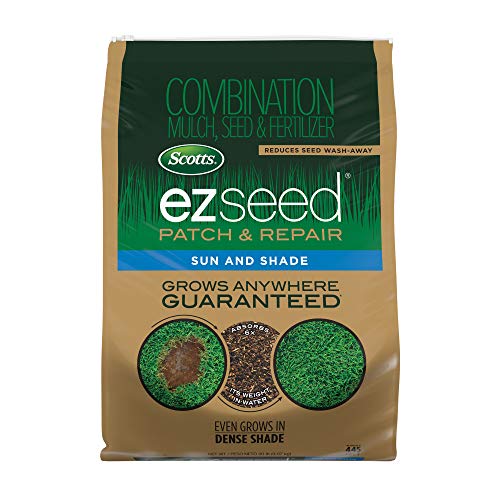
Scotts EZ Seed Patch & Repair Sun & Shade
Compare a patch mix whose mulch changes color when dry, with different coverage and an instruction to leave some bare ground visible.
Sources & research notes
This review draws on published product information and grass-selection guidance. We have not conducted a hands-on trial of this product. Species guidance helps explain the choice; it is not a trial of the bag you buy.
- University of Minnesota Extension: renovating a lawn
Read 2026-09-23
- UMass Extension: understanding the turfgrass seed label
Read 2026-09-23
- Pennington: The Rebels Tall Fescue Grass Seed Blend
Read 2026-09-23
- Penn State Extension: turfgrass species for Pennsylvania, bluegrass and fescues
Read 2026-09-23
- Scotts: current PatchMaster family directions; selected 10 lb size
Read 2026-09-23
- Scotts: 2018 manufacturer artwork for 4.75 lb PatchMaster
Read 2026-09-23
Amazon product identity: Scotts PatchMaster Lawn Repair Mix Sun + Shade Mix, 4.75 lbs.
Commerce identity only; not evidence of product performance.
Buy on AmazonRead 2026-09-23
- Scotts: package-specific product description and directions
Read 2026-09-23
Ready to compare the bag?
Check the package size and seed tag before ordering.