
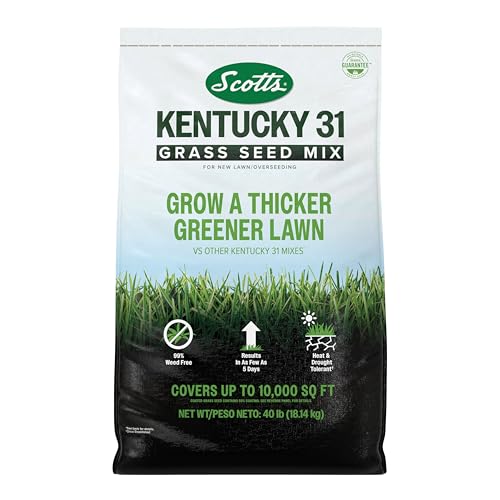
Scotts Kentucky 31 Grass Seed Mix
Consider the blend for a practical fescue project only after deciding that its annual-ryegrass component and K-31 texture fit the lawn. For a lasting lawn specification, compare the actual seed tag with local grass recommendations.
- A good fit for
- A larger project in sun or moderate shade where the buyer accepts a mixed K-31 product and checks its suitability against local species guidance.
- The tradeoff
- This is not pure K-31. The current page gives no species percentages, and Minnesota Extension lists annual ryegrass among poor lawn-seed choices.
We may earn a commission from purchases through our links. How this works
Buy on AmazonResearch-based review · Updated
Kentucky 31 on the front does not mean Kentucky 31 alone
Scotts' current description identifies three components: premium tall fescue, Kentucky 31 tall fescue and annual ryegrass. The existing purchase link selects the forty-pound mix. It should therefore be compared with other mixed lawn products, not described as a bag containing only Kentucky 31.
The distinction changes the reason to buy it. Scotts emphasizes visible growth in as few as five days, alongside heat and drought tolerance once established. Those are manufacturer claims about the blend; they do not tell you how much annual ryegrass is present or what proportion of the mature stand will be each component.
The product page does not provide current lot percentages. Check the actual seed tag for that information and for purity, germination and test date. A big bag and a familiar cultivar name can make the purchase look straightforward, but the analysis label is still important when the long-term composition matters.[5][6][2]
Choose the texture and species tradeoff deliberately
- K-31 component
- Penn State describes traditional Kentucky 31 as coarser and lighter green than many improved tall fescues.[4]
- Annual ryegrass component
- Minnesota Extension advises avoiding annual ryegrass in its home-lawn seed guidance. Check local suitability.[7]
Read the blend tradeoff
Penn State describes older Kentucky 31 as coarser and lighter green than many improved turf-type tall fescues. The Scotts mix also includes what the manufacturer calls premium tall fescue, but without current percentages or variety names we cannot predict precisely how the finished lawn will look.
Annual ryegrass deserves a separate check. Minnesota Extension lists it among poor choices for home-lawn seed mixtures. That is regional guidance, not a declaration that every use of this Scotts product will fail. It does mean that quick first growth should not be the only basis for a permanent-lawn decision.
The practical question is whether the mixture fits your region and expectations. If you are trying to match a fine-textured existing lawn, appearance and species compatibility matter. If you are choosing seed for a larger general-purpose area, the actual blend and application quantity still matter more than assuming every product labeled K-31 is equivalent.[5][4][7][2]
A forty-pound bag covers much less bare soil than overseeding
Read the large-project calculation
The selected forty-pound Scotts page gives 3,300 square feet for new lawn and 10,000 square feet for overseeding. Those figures match different jobs. The prominent ten-thousand-square-foot claim should not be used for a bare-ground project.
For a 5,000-square-foot area, the package coverage calculates to about 60.61 pounds for new lawn or 20 pounds for overseeding. One forty-pound bag is therefore insufficient for the new-lawn job, while it contains more than the calculated overseeding amount. The new-lawn calculation is approximate because the manufacturer rounds its coverage figure.
Measure the area that actually needs treatment and exclude paths, beds and structures. If the project has both bare and established areas, estimate those parts separately using the relevant directions. A single average rate can obscure why some parts need much more product than others. Compare current project cost only after those quantities are clear.[5][6]
Five-day growth is an opening signal, not the finish line
Scotts says visible growth can appear in as few as five days with the right preparation and care. The wording matters: it is an earliest-response claim, not a guarantee that all seeds will emerge at once or that the lawn will be ready for regular use in five days.
The manufacturer recommends spring or fall, with average soil temperatures of 60–75°F or air temperatures of 65–85°F. It positions the blend for full sun and moderate shade, and explicitly excludes heavy, dense shade. Those limits are useful when deciding whether to seed now and whether the problem area is suitable at all.
For new lawn, loosen the upper two inches of soil and remove debris before applying. Then lightly rake the seed into the soil. The two-inch preparation step is not a direction to bury the seed two inches deep. Even a product promoted for quick growth needs a prepared seedbed and appropriate conditions.[5]
Make watering and later care part of the purchase
Scotts directs daily watering, or watering as needed, to keep the soil surface moist until seedlings reach at least two inches. Before committing to a large area, consider whether your watering setup can maintain that seedbed. Buying enough seed does not by itself make a large establishment project manageable.
Penn State notes that tall fescue needs time to build an extensive root system. The eventual heat and drought tolerance of an established stand should not be used to reduce attention during emergence. Its primarily bunch-type growth and fair recovery also mean that repeatedly worn areas may not fill as rapidly as buyers expect from a spreading species.
Later fertilization should fit local conditions and the lawn's needs. Penn State warns that high nitrogen in hot, humid weather can worsen tall-fescue brown patch. That species guidance provides a useful caution against treating more fertilizer as the automatic answer to every thin area. Store remaining seed according to the current package directions.[5][4]
Compare a turf-type fescue blend if texture matters more
The Rebels is a relevant alternative when you want to investigate a tall-fescue blend without making the Scotts mix's annual-ryegrass component part of the plan. Read Pennington's own description, seed tag and coverage instructions; the forty-pound Scotts calculations cannot be transferred to a different product.
The comparison is about documented formulation and intended lawn characteristics. We do not have a current retail-bag test establishing that one brand wins on appearance, durability or water use. Penn State's distinction between older K-31 and improved turf-type fescues is a species and cultivar-class distinction, not a product score.
If you choose Scotts Kentucky 31 Mix, choose the mixture knowingly. Verify its lot label, make sure local guidance supports the grass selection, and budget seed and watering for the correct area. Those checks matter more than the speed of the first green shoots or the biggest coverage number on the front.[3][5][4][2][7]
When to choose something else
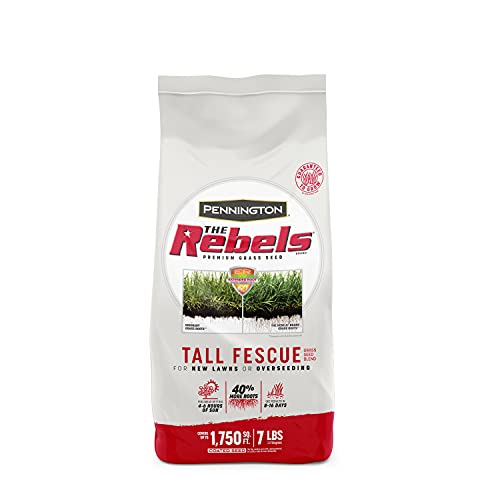
Pennington The Rebels Tall Fescue Mix
Compare a documented tall-fescue blend when improved turf-type texture is the priority; inspect its own seed tag and coverage instead of treating it as equivalent to the Scotts mix.
Sources & research notes
This review draws on published product information and grass-selection guidance. We have not conducted a hands-on trial of this product. Species guidance helps explain the choice; it is not a trial of the bag you buy.
- University of Minnesota Extension: renovating a lawn
Read 2026-09-23
- UMass Extension: understanding the turfgrass seed label
Read 2026-09-23
- Pennington: The Rebels Tall Fescue Grass Seed Blend
Read 2026-09-23
- Penn State Extension: turfgrass species for Pennsylvania, bluegrass and fescues
Read 2026-09-23
- Scotts: current product description and package-specific directions
Read 2026-09-23
Amazon product identity: Scotts Kentucky 31 Grass Seed Mix, 40 lbs.
Commerce identity only; not evidence of product performance.
Buy on AmazonRead 2026-09-23
- University of Minnesota Extension: buying turfgrass seed, species cautions
Read 2026-09-23
Ready to compare the bag?
Check the package size and seed tag before ordering.