
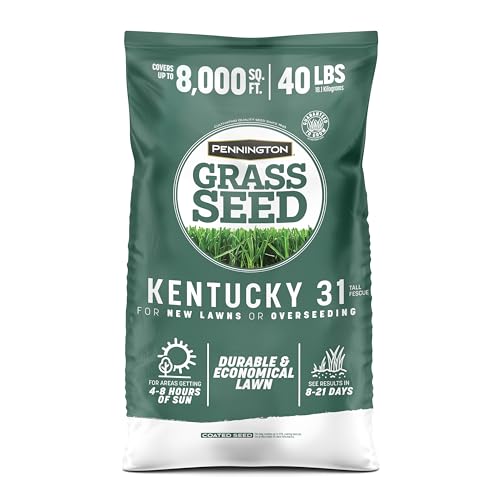
Pennington 100% Kentucky 31 Tall Fescue (Penkoted)
Consider Kentucky 31 for a utility lawn where coarse texture is acceptable; compare a modern turf-type blend before adding it to a fine-textured front lawn.
- A good fit for
- A cool-season utility lawn whose owner accepts a coarser, lighter-green appearance and has measured a project large enough for the forty-pound package.
- The tradeoff
- Wear tolerance does not mean rapid repair of bare areas, and Kentucky 31 can form conspicuous coarse clumps in a finer lawn.
We may earn a commission from purchases through our links. How this works
Buy on AmazonResearch-based review · Updated
Decide whether its appearance belongs in this lawn
Kentucky 31 is tall fescue, not Kentucky bluegrass. The shared place name is not a sign that the two grasses look or spread alike. Penn State distinguishes older varieties such as Kentucky 31 from newer turf-type selections: the older grass is coarser and lighter green, while improved selections can have finer leaves and greater density.
That difference matters most when repairing an existing lawn. A patch that becomes green can still be a poor visual match. Before sowing a conspicuous front-yard gap, identify the surrounding grass and decide whether a broad-leaved clump would solve the problem you actually care about. Uniform cover, fine texture and a low purchase cost are different priorities.
We would consider this product for practical turf coverage where the coarser appearance is acceptable. We would be more cautious about introducing it into a lawn maintained for an even, fine-textured finish. This is a species-and-cultivar assessment based on published guidance, not a hands-on comparison of current Pennington bags.[7][2][1]
Separate durability from the ability to fill a hole
- Existing turf wears thin
- Investigate repeated traffic and soil conditions before reseeding the same failure.[4][1]
- A bare gap needs repair
- Kentucky 31 is primarily bunch-forming; plan seed-based repair rather than aggressive lateral spread.[6][7]
- A finer lawn needs matching
- Check the surrounding grass before introducing a coarser cultivar.[7]
Read the repair tradeoffs
A grass can withstand use without repairing an open patch quickly. Tall fescue grows mainly in bunches. Penn State describes its recovery potential as only fair, and Pennington recommends overseeding larger bare or thin areas rather than expecting Kentucky 31 to spread aggressively across them.
For a recurring dog path or a compacted play area, buying more seed may leave the cause untouched. Minnesota's lawn guidance emphasizes examining traffic, drainage and soil conditions. Move or spread out repeated traffic where possible, and make soil repair part of the renovation decision. A wear-tolerance description is not evidence that seedlings can take immediate heavy use.
Treat the condition of the lawn as useful information. If the same narrow strip repeatedly disappears, consider whether that area needs a different use or surface. If thinning is spread across otherwise suitable turf, overseeding may make more sense. The package can supply seed; it cannot diagnose the reason the first stand failed.[7][6][4][1]
Budget for the forty-pound bag at the correct rate
- 40 lb, new lawn
- About 3,333 sq ft: 40 ÷ 12 × 1,000.[6]
- 40 lb, overseeding
- Up to 8,000 sq ft: 40 ÷ 5 × 1,000.[6]
- 5,000 sq ft project
- 60 lb for a new lawn; 25 lb for overseeding, using the stated rates per 1,000 sq ft.[6]
Read the coverage calculation
The primary purchase link selects forty pounds. Pennington specifies twelve pounds per 1,000 square feet for a new lawn and five pounds for overseeding. That makes the bag sufficient for about 3,333 square feet of new lawn, or up to 8,000 square feet of an existing stand at the overseeding rate.
The larger coverage number should not be used to plan a bare-soil project. A 5,000-square-foot new lawn needs sixty pounds at the stated rate, while an overseeding project of the same size needs twenty-five pounds. Measure the actual seeded area, separating established turf from bare sections. Paths, beds and other surfaces do not belong in the seed-area total.
Compare purchases by the total quantity required and the grass you want to establish. A large bag can leave a substantial surplus on a small repair; a small-looking coverage error can leave a large project short. We do not quote a live price here or infer current stock from the package photograph.[6][1]
Read the analysis tag rather than assuming purity
The cultivar name, net bag weight and seed analysis answer different questions. A package identifying Kentucky 31 does not by itself tell you the current lot's pure-seed percentage, germination result, test date, inert material or weed-seed content. UMass explains how those items appear on a seed label and why they matter when comparing bags.
The verified forty-pound front-package artwork identifies coated seed. That front panel does not provide the current lot's treatment formulation or coating percentage. Check the actual bag and analysis tag rather than treating the package name as a complete account of its contents.
When comparing two offers, inspect the seed analysis as well as their net weights. The same number of pounds does not establish the same amount of viable seed. This review has not tested a delivered lot, so its purity and germination results remain unverified. The documented package size is useful for the manufacturer's coverage calculation; it is not a laboratory measurement of the bag you will receive.[2][8]
Prepare for establishment, not just the first green shoots
A successful repair starts before seed goes into the spreader. Minnesota Extension recommends diagnosing the decline, considering a soil test and correcting the site where necessary. Seed-to-soil contact matters, so loose seed resting on a layer of debris is not equivalent to a prepared seedbed.
Pennington's main instructions specify no more than a quarter-inch planting depth and consistent moisture until seedlings reach roughly three inches. The product page gives eight to twenty-one days to germination, while its FAQ gives seven to fourteen under ideal conditions. Those are first-emergence estimates, not interchangeable promises that a finished lawn will be ready for use on a set date.
Plan watering access and protection from traffic before planting. Soil and weather determine how quickly the surface dries, so a single fixed sprinkler schedule is not enough to judge the seedbed. Continue inspecting the stand as it develops; the appearance of the first shoots does not establish that the slower areas have failed or that the entire lawn is rooted.[6][1][4]
Compare a turf-type blend when finish matters more
The Rebels is a useful comparison if your main reason for reconsidering Kentucky 31 is appearance. It is sold as a turf-type tall-fescue blend rather than this older cultivar. That gives you a different buying direction without claiming a current-bag performance winner or treating marketing language as an independent trial.
Both choices still require suitable local conditions and ongoing care. NC State's tall-fescue maintenance guidance addresses summer stress, mowing and brown patch; Kentucky 31's durability positioning does not eliminate those seasonal decisions. Check regional advice before assuming that a cool-season grass is suitable throughout every part of a warm state.
Our decision would turn on the desired finish, the grass already present and the size of the job. Choose the cultivar deliberately, then compare the needed quantity. Buying the largest bag first and deciding what sort of lawn it will make afterward reverses the useful order of those decisions.[5][7][3][6]
When to choose something else
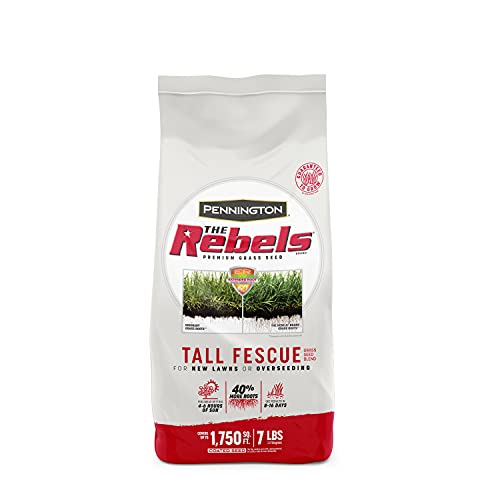
Pennington The Rebels Tall Fescue Mix
Compare The Rebels if you want a turf-type tall-fescue blend instead of Kentucky 31’s older, coarser appearance. No current-bag performance winner is established here.
Sources & research notes
This review draws on published product information and grass-selection guidance. We have not conducted a hands-on trial of this product. Species guidance helps explain the choice; it is not a trial of the bag you buy.
- University of Minnesota Extension: renovating a lawn
Read 2026-09-23
- UMass Extension: understanding the turfgrass seed label
Read 2026-09-23
- NC State Extension: Tall fescue lawn maintenance calendar
Read 2026-09-23
- University of Minnesota Turfgrass Science: Does your lawn struggle?
Read 2026-09-23
- Pennington: The Rebels Tall Fescue Grass Seed Blend
Read 2026-09-23
- Pennington: Kentucky 31 Tall Fescue product and planting guide
Read 2026-09-23
- Penn State Extension: Turfgrass Species for Pennsylvania, tall fescue
Read 2026-09-23
- Pennington: forty-pound Kentucky 31 front-package artwork
Read 2026-09-23
Ready to compare the bag?
Check the package size and seed tag before ordering.