
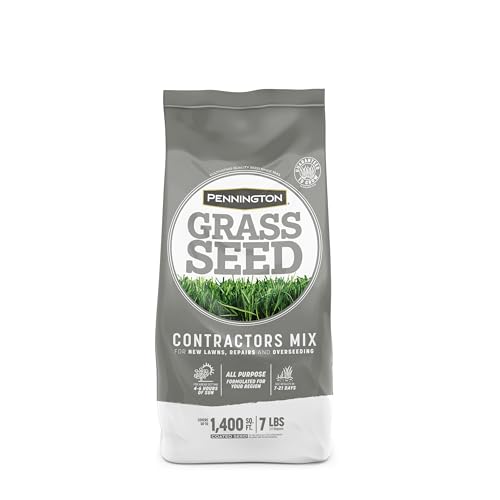
Pennington Contractors Grass Seed Mix
Consider Contractors Central for a measured, region-appropriate seeding project after checking the bag’s seed analysis; the broad product name is not enough to establish its grass mixture.
- A good fit for
- A new-lawn or overseeding project with four to six hours of sun where the Central formulation and actual seed tag fit the site.
- The tradeoff
- Regional formulas differ, and the seven-pound bag’s 1,400-square-foot headline applies to overseeding; bare ground needs substantially more seed.
We may earn a commission from purchases through our links. How this works
Buy on AmazonResearch-based review · Updated
Start with the Central designation and the seed tag
The primary purchase link is for a seven-pound Contractors Central bag. Pennington also lists Northern and Southern versions. Those are regional products, not simply different package colors, and a description of one should not be carried over automatically to another.
The manufacturer's current page says the varieties are formulated for the region in which the bag is sold, but it does not supply a complete current-lot species and cultivar analysis. We therefore do not treat this product as a fixed percentage recipe or promise a particular named cultivar. Check the regional designation and the actual seed analysis before buying for a large project.
This matters when matching existing turf. A name such as Contractors Mix tells you less about the finished lawn than the grasses on the tag. If appearance is a priority, compare those species with what already grows in the yard. If the tag does not answer the question, the broad all-purpose description does not fill that evidence gap.[6][2][5]
Define what successful coverage means for the project
- Thin existing turf
- Investigate the cause of decline and check compatibility before overseeding.[1][5]
- A recurring worn path
- Address traffic or compaction as part of the repair.[3]
Read the project-fit decisions
A quick flush of green and a durable finished lawn are different outcomes. Pennington positions this as an all-purpose option for new lawns, repairs and overseeding, but professional-grade wording does not establish an independently tested performance advantage over another retail mix.
Start with the reason you need seed. For a newly prepared area, the question is whether the selected grasses fit the climate, light and intended use. For a thin existing lawn, first investigate why it thinned. Minnesota Extension recommends assessing site conditions and management before renovation; otherwise, new seedlings may face the same problem that weakened the old grass.
That assessment can change the purchase. Persistent shade, repeated foot traffic or compaction may need a change in the site or how it is used. Seed selection still matters, but it should come after that diagnosis. We have not conducted a field trial of this bag and do not infer lawn performance from its name, retail popularity or a customer-review score.[6][1][3]
Use the seven-pound coverage, not a larger bag’s figure
The rate and project type explain the coverage difference.[6]
- 7 lb, new lawn
- Up to 580 sq ft stated; 7 ÷ 12 × 1,000 is about 583 sq ft.[6]
- 7 lb, overseeding
- Up to 1,400 sq ft: 7 ÷ 5 × 1,000.[6]
- 1,000 sq ft project
- 12 lb new lawn or 5 lb overseeding; a single 7 lb bag does not cover the new-lawn requirement.[6]
Read the seven-pound coverage calculation
Pennington gives this seven-pound bag up to 580 square feet for a new lawn and 1,400 square feet for overseeding. Its corresponding rates are twelve and five pounds per 1,000 square feet. The new-lawn calculation gives roughly 583 square feet, consistent with the rounded 580-square-foot package guidance.
For a 1,000-square-foot project, that means twelve pounds on bare ground or five pounds for overseeding. One seven-pound bag is short for the first job and sufficient for the second at the stated rate. Measure thin turf separately from bare patches if both occur in the same yard.
The product family also includes larger bags. Their headline coverage does not belong to this purchase link, even when a retailer presents several sizes on one page. Compare the complete quantity needed rather than choosing by the largest square-foot number beside the product name. Spreading the bag more thinly to reach an oversized area is not the same as following the recommended rate.[6]
Use the analysis label to compare value
Net weight is useful for calculating how many bags to buy, but it is not a complete seed-quality comparison. UMass explains that a seed analysis identifies the grasses, purity, germination, test date, inert matter and weed-seed content. Those details tell you things that the front of the bag cannot.
A regional formulation may suit the intended market while still differing from the mix you expected. Avoid assuming that every Contractors bag contains the same species or that the word professional guarantees a particular analysis. Read the lot being offered, especially if you need to match a lawn rather than create general cover.
Value also depends on the result you want and the quantity you need. A bag that appears inexpensive is not necessarily the better purchase if its composition is a poor match or its coverage number describes a different application. This review does not freeze a retail price or stock claim, and it does not verify the purity or germination result of the lot shipped to you.[2][6][5]
Prepare and protect the seedbed through establishment
Pennington specifies a quarter-inch planting depth, a seven-to-twenty-one-day germination range and a three-inch mowing height. Those instructions describe stages of establishment. They should not be combined into a promise that the lawn will be ready for normal traffic in a week.
Create seed-to-soil contact and remove surface debris before sowing. The broader renovation work may also involve correcting compaction or using soil-test results to guide amendments. Minnesota's guidance is useful here because it begins with the cause of lawn decline, rather than treating seed as the only input that matters.
Have a watering plan in place before opening the bag. Keep the seedbed moist as it germinates, while inspecting for pooling, runoff or areas that dry unusually fast. Protect the new stand from repeated traffic. As growth progresses, mowing and watering decisions should follow the actual condition of the turf, not simply the number of days since planting.[6][1][3]
Compare a defined grass choice if the mix stays unclear
The Rebels offers a different buying direction: a product explicitly sold as a turf-type tall-fescue blend. It is worth comparing when you have already decided that tall fescue is the right grass and want that species choice to be clear. It is not proof that a premium-named bag will outperform Contractors Central on your site.
The alternative still needs a current seed tag, an appropriate regional planting window and its own quantity calculation. Do not transfer Contractors' coverage to it, or assume that the same bag weight means the same seeded area. The comparison should clarify composition and fit before it becomes a price comparison.
Contractors Central is most defensible as a deliberate, tag-checked purchase for a suitable project. If you cannot establish what is in the offered bag, keep looking rather than turning a general regional description into a precise recipe. That uncertainty matters more than whether the word contractor sounds reassuring.[4][2][6][1]
When to choose something else
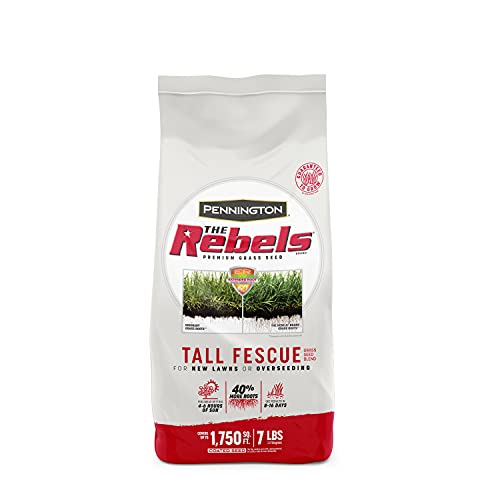
Pennington The Rebels Tall Fescue Mix
Compare The Rebels when you want an explicitly identified turf-type tall-fescue blend; Contractors formulas vary by region and need a current bag analysis. This is a composition choice, not a demonstrated performance ranking.
Sources & research notes
This review draws on published product information and grass-selection guidance. We have not conducted a hands-on trial of this product. Species guidance helps explain the choice; it is not a trial of the bag you buy.
- University of Minnesota Extension: renovating a lawn
Read 2026-09-23
- UMass Extension: understanding the turfgrass seed label
Read 2026-09-23
- University of Minnesota Turfgrass Science: Does your lawn struggle?
Read 2026-09-23
- Pennington: The Rebels Tall Fescue Grass Seed Blend
Read 2026-09-23
- Penn State Extension: Turfgrass Species for Pennsylvania, tall fescue
Read 2026-09-23
- Pennington: Contractors Mix regional products and planting guide
Read 2026-09-23
Ready to compare the bag?
Check the package size and seed tag before ordering.