
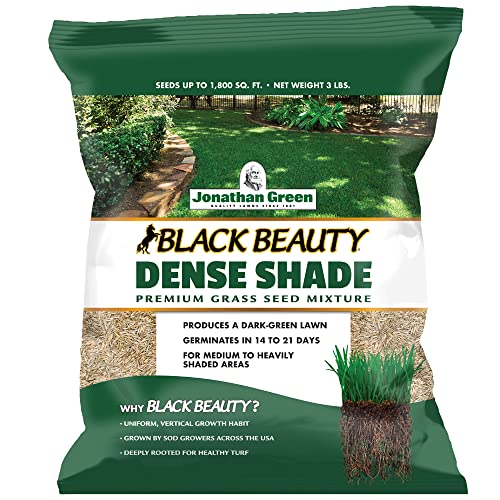
Jonathan Green Black Beauty Dense Shade Grass Seed
Consider Dense Shade when the lawn gets at least four hours of sunlight and a mixed cool-season stand fits your site.
- A good fit for
- Moderately used shaded lawn areas where fine fescues are useful alongside tall fescue and perennial ryegrass.
- The tradeoff
- The shade-focused mix still needs suitable light and soil conditions; repeated traffic and heavy feeding can work against the intended result.
We may earn a commission from purchases through our links. How this works
Buy on AmazonResearch-based review · Updated
Measure the shade before choosing the seed
The most useful number on Jonathan Green's current Dense Shade page is its four-hour minimum sunlight requirement. The name and shaded-yard photographs can otherwise suggest that it will grow almost anywhere beneath trees. Use the stated light requirement as a buying filter before comparing bag sizes.
Watch the planting area when nearby trees are in leaf. An area that looks open in early spring may receive much less light later in the growing season. If the lawn keeps failing, investigate the conditions rather than assuming a stronger shade claim will solve the problem. Renovation guidance from the University of Minnesota emphasizes finding the reason for decline before reseeding.
Dense Shade is a cool-season mixture for shaded and partly sunny lawns, with moderate traffic tolerance in the manufacturer's specification. That is a reasonable starting point for a lightly used yard with some sun. It is less convincing as an answer to a heavily used shortcut through persistent shade. A different use of that area may be more practical than repeated purchases of seed.[5][2][8]
Three grass groups, not an all-fine-fescue lawn
The current description combines three cool-season grass groups.[5]
- Tall fescue and ryegrass
- Part of the current manufacturer-described mixture; this is not a pure fine-fescue blend.[5]
- Fine fescues
- Bring useful shade tolerance, with differences among the individual species.[4]
Read the mixture and current-lot distinctions
The current product page lists turf-type tall fescue, perennial ryegrass and fine fescues. It does not list Kentucky bluegrass. The 2026 manufacturer catalog also shows those three groups, with named cultivars of tall fescue, ryegrass, Chewings fescue and creeping red fescue. That catalog is a description of the offered mixture, not the seed analysis for a bag in your hand.
The distinction matters when comparing alternatives. Fine fescues are narrow-leaved grasses with useful shade tolerance; they are not simply smaller versions of tall fescue. Minnesota Extension describes meaningful differences even among the fine fescues, including their spreading habits, color and response to wear. A mixed bag should not be treated as though every plant has the same strengths.
Check the actual seed tag for species, cultivar names, purity, germination and unwanted seed. The manufacturer's catalog says mixtures can change, so its percentages should not become a permanent formula on a shopping page. We have not verified a current lot or tested this product in a lawn.[5][7][4][3]
Plan around the three-pound bag’s actual coverage
The three-pound bag has separate new-lawn and overseeding coverage.[5]
- 3 lb, new lawn
- Up to 900 sq ft.[5]
- 3 lb, overseeding
- Up to 1,800 sq ft.[5]
- 1,000 sq ft project
- About 3.33 lb new lawn or 1.67 lb overseeding, calculated from package coverage.[5]
Read the quantity assumptions
The linked package is three pounds. Jonathan Green lists that size for up to 900 square feet of new lawn or 1,800 square feet of overseeding. Those are different jobs: the larger area assumes an existing stand that is being thickened, rather than bare soil becoming an entirely new lawn.
For a 1,000-square-foot area, those figures imply about 3.33 pounds for new lawn or 1.67 pounds for overseeding. A three-pound bag is therefore slightly short of the manufacturer's stated new-lawn quantity for that area. The figures are planning calculations from maximum package coverage, so measure carefully and confirm the actual bag directions before setting a spreader.
A seven-pound option has different total coverage: 2,100 square feet new or 4,200 overseeding. Do not apply its headline to the three-pound listing. If part of a project is bare and part already has suitable grass, calculate those areas separately. Compare the amount needed for the job instead of assuming that a low price for one small bag makes it the cheaper project.[5]
Establish it during a suitable cool-season window
Jonathan Green gives fourteen to twenty-one days for germination, while its package notes that spring plantings may take longer. First shoots are a progress marker, not a fully established lawn or a signal to resume regular play. Plan the project around local cool-season planting conditions and the time available to care for seedlings.
The manufacturer says soil should be at least 55°F. Its broad spring and fall calendar is useful orientation, but the dates need adapting to location and weather. Avoid turning a national product calendar into a precise local planting deadline. Check recent weed-control applications too, using the actual herbicide's reseeding interval rather than relying on a generic thirty-day rule.
Prepare for soil contact by removing debris and loosening the surface. The package says to rake seed in lightly and not bury it deeper than a quarter-inch. Keep the seedbed moist during germination, adjusting light watering to the weather and site. Shade does not make establishment watering unnecessary, but repeatedly saturating the area is not the objective either.[5][6][2]
Maintain the shaded stand with restraint
The product page specifically warns against high-nitrogen feeding in shade. More fertilizer is not a reliable way to make a low-light lawn grow like a sunny one. Use soil information and locally appropriate maintenance guidance, rather than automatically adding every companion product promoted beside the seed.
For the first mowing, the current webpage says the grass should reach three to four inches; the downloadable package gives two-and-a-half to three inches. Follow the directions on the actual package and judge the developing stand carefully. The difference should not be hidden by presenting one exact number as a universal rule. Keep mower blades sharp and avoid removing more than a third of the leaf at once.
Minnesota's fine-fescue guidance favors a low-to-moderate feeding approach and slightly higher cutting in shade. It also warns that mowing or heavy traffic during drought can cause damage. That provides useful context for a mixture containing fine fescues, not a complete maintenance prescription for every Dense Shade lawn. Climate and the other grasses in the mix still matter.[5][6][4][2]
Compare a fine-fescue-only option when inputs matter most
Outsidepride Legacy Fine Fescue is a relevant comparison if you want a blend of fine fescues without the tall fescue and ryegrass in Dense Shade. Its current manufacturer description combines hard, Chewings and creeping red fescues. That is a different grass choice, not merely a different bag design or a proven quality ranking.
A fine-fescue-focused lawn can be attractive where regional guidance supports lower inputs and shade tolerance. It still has traffic and drought-management limits. Conversely, Dense Shade's mixture may be more appealing when you specifically want several cool-season grass groups together. Neither choice removes the need to assess light, soil conditions and how people use the area.
If a narrow path keeps wearing bare, address the repeated traffic as part of the project. Minnesota's turf guidance discusses redistributing use and relieving compaction, and shows how a path can be more appropriate where grass repeatedly fails. The useful purchase is the one that fits a viable lawn plan, not the one with the strongest promise on the front.[1][5][4][8]
When to choose something else
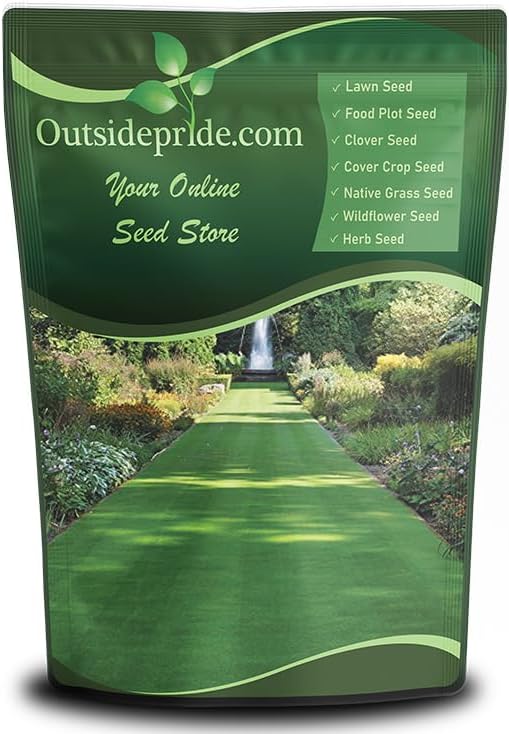
Outsidepride Legacy Fine Fescue Mix
Compare Legacy for a fine-fescue-only blend where regional guidance supports that choice. Dense Shade also includes tall fescue and ryegrass; neither option solves unsuitable light or repeated excessive wear.
Sources & research notes
This review draws on published product information and grass-selection guidance. We have not conducted a hands-on trial of this product. Species guidance helps explain the choice; it is not a trial of the bag you buy.
- Outsidepride: Legacy Fine Fescue product and planting guide
Read 2026-09-23
- University of Minnesota Extension: renovating a lawn
Read 2026-09-23
- UMass Extension: understanding the turfgrass seed label
Read 2026-09-23
- University of Minnesota Extension: Planting and maintaining a fine fescue lawn
Read 2026-09-23
- Jonathan Green: Black Beauty Dense Shade product and planting guide
Read 2026-09-23
- Jonathan Green: Dense Shade manufacturer package artwork
Read 2026-09-23
- Jonathan Green: 2026 retail catalog, page 18
Read 2026-09-23
- University of Minnesota Turfgrass Science: Does your lawn struggle?
Read 2026-09-23
Ready to compare the bag?
Check the package size and seed tag before ordering.