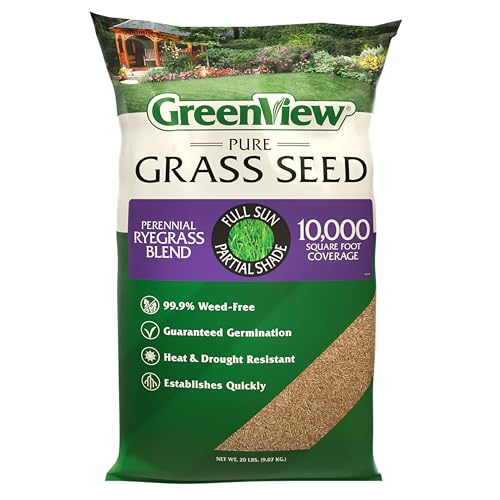
GreenView Pure Grass Seed Perennial Ryegrass
Consider it when perennial ryegrass fits the site and quick establishment matters; assess winter and summer conditions before making it the whole lawn.
- A good fit for
- Suitable cool-season repair or seeding projects where an uncoated perennial ryegrass blend meets the local grass plan.
- The tradeoff
- Fast germination does not settle long-term climate fit, and winter overseeding can delay or damage a warm-season lawn’s spring recovery.
We may earn a commission from purchases through our links. How this works
Buy on AmazonResearch-based review · Updated
Know the blend and the bag you are buying
GreenView identifies this as a blend of perennial ryegrass varieties, with no added coatings or fillers. That means it is a same-species blend, rather than a mixture of ryegrass, bluegrass and fescues. The current product page does not give the exact cultivar percentages for the lot that will arrive, so a named formula from another bag should not be treated as a permanent recipe.
The linked Amazon identity currently corresponds to a twenty-pound bag. GreenView also sells three- and seven-pound sizes, which have different coverage totals. Match the weight at checkout before relying on an older photograph or a coverage figure from a smaller package. The product's own size-specific directions are more useful than a generic maximum-coverage headline.
Pure seed is a description of the uncoated format, not a claim that every seed will germinate or that a bag contains literally zero inert matter. Inspect the actual analysis for purity, germination, weed seed, test date and cultivar names. Those details make a comparison with coated seed meaningful; the large number printed on the front cannot answer all of them.[4][6][3]
Quick germination is useful, but it is only the start
First shoots
GreenView’s stated germination range is 7–12 days when used as directed.[4]
Developing stand
The package estimates establishment 30–45 days after germination; actual conditions govern progress.[6]
First mowing
The package says to wait until new grass reaches 3 inches and maintain a 3-inch height.[6]
Read what the timeline means
GreenView says germination begins in seven to twelve days when the seed is used as directed. That can make perennial ryegrass attractive when you want a compatible repair to begin growing promptly. It is not a five-day lawn guarantee, and the first shoots do not mean the area is ready for regular wear.
The package comparison separates germination from establishment, listing thirty to forty-five days from germination for the latter. Treat that as a manufacturer planning estimate. Moisture, planting conditions and the developing stand still determine when to mow and how soon to resume use. A quick start is most helpful when the selected grass can also persist in the location.
GreenView describes dark green color, medium-to-fine texture and resistance to several stresses once roots are established. These are manufacturer descriptions, rather than results from our own lawn tests or independent trials of the current bag. Minnesota Extension describes perennial ryegrass as quick to establish, but also notes higher maintenance and susceptibility to diseases. Speed is a reason to compare the species, not a reason to ignore its limits.[4][6][1]
Check climate fit before choosing an all-ryegrass lawn
Perennial ryegrass has legitimate uses in home lawns, athletic fields and other turf settings. It is not categorically unsuitable for every permanent lawn, but neither is it a universal northern-lawn choice. Local temperature patterns and winter exposure matter more than the word perennial on the bag.
Minnesota Extension specifically warns that perennial ryegrass lacks winter hardiness and recommends limiting its share in many Minnesota lawn mixtures. That advice is regional, not a nationwide maximum, but it is a strong reason to avoid choosing an all-ryegrass lawn there solely for rapid establishment. In another climate, use the local extension recommendation for species and mixtures.
GreenView markets the blend for sun and partial shade, and promotes heat and drought resistance after healthy roots develop. These claims do not establish survival through every severe winter or hot, dry summer. For a repair, identify the existing grass and the reason it thinned before adding a different species. A fast green patch that does not suit the site can leave the original problem unresolved.[4][1][2]
Winter color over bermuda has a real tradeoff
Overseeding a dormant warm-season lawn with ryegrass can create winter color, but it should be a deliberate management choice. Clemson Extension does not recommend the practice for healthy, established warm-season home lawns simply to keep them green. Its guidance explains that ryegrass competes for water and nutrients and can delay spring transition back to the underlying grass.
In a cool, wet spring, ryegrass may persist longer than expected. Shade from the ryegrass and poor transition management can harm the warm-season lawn. Preparing by aggressively scalping the existing grass creates another risk: Clemson describes the loss of leaf area and the use of stored reserves as the lawn heads into dormancy.
That means the GreenView bag should not be presented as an automatic winter upgrade or a grass guaranteed to disappear neatly when summer arrives. If winter overseeding is still appropriate for your situation, use local guidance for the existing species, timing, seeding rate and spring transition. The general overseeding coverage on a retail bag is not by itself a complete winter-overseeding program.[7][4]
Size the purchase using the right coverage column
- 20 lb, new lawn
- 5,000 sq ft, equivalent to 4 lb per 1,000 sq ft.[4]
- 20 lb, overseeding
- 10,000 sq ft, equivalent to 2 lb per 1,000 sq ft.[4]
- 2,000 sq ft project
- 8 lb new lawn or 4 lb overseeding.[4]
Read the bag-size comparison
GreenView gives a twenty-pound bag coverage of 5,000 square feet for a new lawn or bare spots, and 10,000 square feet when overseeding existing turf. Those figures correspond to four pounds per 1,000 square feet for new lawn and two pounds for overseeding. They are different jobs, not two competing claims about the same application.
For a 2,000-square-foot project, the calculation is eight pounds for bare-ground establishment or four pounds for overseeding. A seven-pound bag covers 1,750 square feet new or 3,500 square feet overseeded, so it falls short of that new-lawn project even though its larger front-of-bag figure might look sufficient. Calculate bare and thin areas separately when the project contains both.
Use these published coverage figures to compare the current cost per treatment area, while checking the lot's analysis and the grass species. We have not established a price advantage over coated seed or other brands. Buying additional weight does not improve a stand if you sow too heavily; the package warns that crowded seedlings compete and can leave thin areas.[4][6][3]
Prepare for the lawn you want to keep
GreenView's package calls for loosening soil, removing debris and lightly raking the seed so no more than a quarter-inch of soil covers it. It also warns that imported or existing topsoil can contain weed seeds. Deal with that preparation before sowing, and follow any lawn-treatment product's reseeding restrictions rather than spraying first and guessing the waiting time.
Keep the seedbed moist with light watering, avoiding saturation. The package advises watering at least daily until the young grass reaches two inches, then maintaining moisture for root growth. Check actual conditions instead of treating a daily schedule as sufficient during drying weather. Wait until the grass is three inches tall for the first mowing and keep the blade sharp.
If local guidance favors tall fescue instead, GreenView's Turf Type Tall Fescue blend is a relevant alternative. It has different germination and coverage figures, so do not transfer this ryegrass calculation to it. Decide on species first, then compare bag sizes. Neither pure-seed branding nor a quick emergence date establishes that one grass is the right permanent lawn everywhere.[6][5][1]
When to choose something else
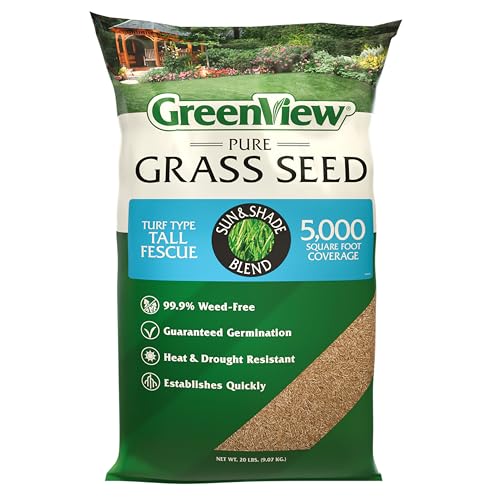
GreenView Pure Grass Seed Turf Type Tall Fescue
Compare GreenView’s tall-fescue blend when tall fescue better matches local lawn guidance. Its slower stated germination and different coverage require a separate quantity calculation.
Sources & research notes
This review draws on published product information and grass-selection guidance. We have not conducted a hands-on trial of this product. Species guidance helps explain the choice; it is not a trial of the bag you buy.
- University of Minnesota Extension: buying turfgrass seed
Read 2026-09-23
- University of Minnesota Extension: renovating a lawn
Read 2026-09-23
- UMass Extension: understanding the turfgrass seed label
Read 2026-09-23
- GreenView: Pure Grass Seed Perennial Ryegrass product and coverage
Read 2026-09-23
- GreenView: Pure Grass Seed Turf Type Tall Fescue product and coverage
Read 2026-09-23
- GreenView: Pure Grass Seed package directions and variety comparison
Read 2026-09-23
- Clemson Extension: Should you overseed your warm-season lawn?
Read 2026-09-23
Ready to compare the bag?
Check the package size and seed tag before ordering.