
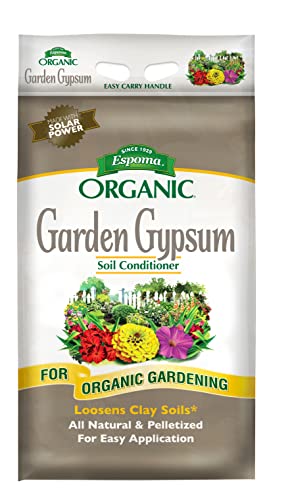
Espoma Organic Garden Gypsum
A straightforward gypsum format with accessible application directions. Its usefulness depends on the soil problem: it supplies calcium and sulfur without acting like lime, and it should not be treated as a universal clay-loosening product.
- A good fit for
- A measured lawn project where soil guidance supports gypsum and the buyer can manage the relatively large product quantity at the labeled lawn rate.
- The tradeoff
- One 36-pound bag covers 1,000 square feet at the maker’s standard lawn rate. Broad clay and turf-burn marketing needs context: gypsum does not correct every drainage problem, and organic branding does not remove dust-handling precautions.
We may earn a commission from purchases through our links. How this works
Buy on AmazonResearch-based review · Updated
A pelletized mineral amendment in a 36-pound bag
The linked product is Espoma Organic Garden Gypsum in the 36-pound size. Espoma also sells a six-pound package, so check the selected size rather than relying on a product-family photograph. The manufacturer describes pelletized mined gypsum for lawns, garden beds, shrubs and flowers.
Gypsum is calcium sulfate, which makes its main agronomic role different from a nitrogen lawn fertilizer or a starter formula. Oregon State explains that gypsum supplies calcium and sulfur without increasing soil pH as agricultural lime does. The word garden on the bag does not limit it to flower beds, but directions vary by application.
The pelletized form gives the homeowner a product that can be distributed with a drop or broadcast spreader. That is a practical handling feature, not proof that every soil needs it. Choose the amendment for a defined soil purpose first, then decide whether the package size and application workload fit the area.[1][4][3]
Clay soil is not a diagnosis of gypsum need
- Nutrient purpose
- Gypsum can supply calcium and sulfur when that is the identified need.[3]
- Acidity correction
- Gypsum does not raise pH like agricultural lime.[3]
- Drainage claim
- Ordinary clay is not enough: the extension discussion associates gypsum’s drainage benefit with high-sodium sodic soils.[3]
Read the clay and nutrient distinction
Espoma promotes this product for loosening heavy clay. Independent context changes how that claim should be used: Oregon State Extension explains that gypsum’s drainage benefit applies to sodic soils with high sodium, and that ordinary acidic clay in its Columbia County example does not respond as a quick drainage fix.
That regional explanation is not a statement that no lawn elsewhere needs gypsum. It is a reason to identify the actual soil condition before treating clay texture as sufficient evidence. Calcium or sulfur requirements are a different rationale from a promise to loosen any compacted lawn.
The manufacturer also promotes use around turf burns associated with ice-melter and pets. The sources reviewed here do not establish a reliable recovery time or universal repair result for this retail product. A brown patch needs an appropriate diagnosis; choosing a mineral amendment from its broad marketing alone leaves the cause unresolved.[4][3]
Plan the lawn quantity at 36 pounds per 1,000 square feet
- 1,000 sq ft lawn area
- At Espoma’s standard 36 lb per 1,000 sq ft rate, calculated quantity is one 36 lb bag.[4]
- 2,000 sq ft lawn area
- At 36 lb per 1,000 sq ft, calculated quantity is 72 lb, or two 36 lb bags.[4]
- 5,000 sq ft lawn area
- At 36 lb per 1,000 sq ft, calculated quantity is 180 lb, or five 36 lb bags.[4]
Read the quantity and higher-rate caveat
Espoma’s standard lawn direction is 36 pounds per 1,000 square feet. That means one 36-pound bag covers 1,000 square feet, a 2,000-square-foot area takes 72 pounds and a 5,000-square-foot area takes 180 pounds, or five bags, at that rate. These are calculated planning quantities, not a finding that every area should receive treatment.
The maker says to double the rate for exceptionally heavy clay. Read that direction alongside the soil-fit limitation: a heavier application cannot be assumed to solve a problem for which gypsum is unsuitable. Obtain soil-specific guidance before treating texture as the reason to double the amount.
Do not substitute a lawn rate from another gypsum brand because its front coverage is larger. ENCAP’s photographed 30-pound bag lists 5,000 square feet, but its exact current directions remain unverified here. Different coverage claims do not establish equivalent formulations or an equal treatment effect. Use the chosen product’s current instructions and the actual soil recommendation.[4][3][1][7]
Keep lawn and garden directions separate
For lawns, Espoma recommends a drop or broadcast spreader and watering after application. Its timing guidance allows use during the growing season and says never to apply fertilizers or amendments to frozen soil. The public directions do not establish a universal repeat interval or a fixed amount of irrigation for every lawn.
The garden-bed directions are different: six pounds per thirty square feet worked into the upper six inches of soil. The page separately lists quantities for shrubs and flowers. Those are not interchangeable lawn rates, and the six-inch incorporation depth is not a direction to disturb an established lawn to that depth.
For a seeding project, resolve the soil-amendment need during planning and retain the seed’s own planting and watering instructions. Gypsum is not a substitute for a required nitrogen, phosphate or potash program. The useful purchase calculation is the amount of this mineral amendment for its intended job, separately from seed quantity and any justified fertilizer.[4][3]
Handle the dust even though the product is pelletized
Espoma’s safety data sheet dated January 9, 2026 warns of possible eye and respiratory irritation. It says to avoid breathing dust, use the product outdoors or in a well-ventilated area and wash hands after handling. It recommends protective eyewear and appropriate protective clothing and gloves.
That is more useful handling guidance than assuming an organic product is harmless under every exposure condition. Pour and spread it with the current package and safety information in view, especially when dealing with several heavy bags. Pelletization does not mean dust precautions can be discarded.
The safety sheet calls for cool, dry, ventilated storage in a closed container and keeping spilled material out of storm drains and water bodies. Espoma’s application page says to water after spreading. These are separate tasks: keep product where intended, follow the application directions and store the remainder so it stays contained.[4][6]
A soil test can change what belongs in the cart
MySoil is a relevant alternative when the lawn’s nutrient or pH status is unknown. The manufacturer describes a mail-in laboratory kit reporting plant-available nutrients and pH, with online fertilizer recommendations. Calcium, sulfur and sodium appear among the reported nutrients, but a result still needs interpretation for the site and proposed treatment.
For a suspected sodium-related drainage problem, ask a suitable local adviser whether additional testing or a broader management plan is needed. The Oregon State example shows why a clay label alone cannot make the diagnosis. A routine mail-in test should not be presented as a complete drainage design or a guarantee that gypsum is the solution.
If soil guidance supports gypsum, Espoma’s current public directions make the next decisions clear: confirm the 36-pound package, measure the treatment area, plan the material quantity and water after application. Its value lies in serving that specific job, not in an unqualified promise to transform any heavy soil.[2][3][4][1]
When to choose something else
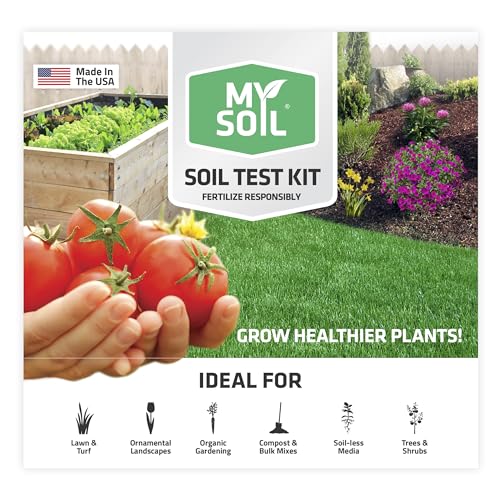
MySoil Soil Test Kit
For nutrient and pH information before buying an amendment; the kit reports calcium, sulfur and sodium among its measurements, with online recommendations.
Sources & research notes
This review draws on published product information and relevant care or operating guidance. We have not conducted a hands-on trial of this product. General guidance explains the intended task; it does not establish this product’s performance.
Amazon: current product identity and package photograph
Commerce identity only; not evidence of product performance.
Buy on AmazonRead 2026-09-23
- MySoil: mail-in laboratory soil test kit
Read 2026-09-23
- Oregon State Extension: Gypsum, soil drainage, and Columbia County gardens (January 2020, page 3)
Read 2026-09-23
- Manufacturer: current espoma product information
Read 2026-09-23
- Manufacturer: current earth-gypsum product information
Read 2026-09-23
- Espoma Organic Garden Gypsum: safety data sheet January 9, 2026
Read 2026-09-23
Amazon: current product identity and package photograph
Commerce identity only; not evidence of product performance.
Buy on AmazonRead 2026-09-23
Check the product before ordering
Check the package size, formulation and current label directions.